Have you ever wondered who first tried to make sense of the stars’ influence on our lives? Long before apps could generate your birth chart in seconds, ancient scholars spent lifetimes observing, calculating, and debating the cosmos. Among them, one name stands out: Claudius Ptolemy. This Greco‑Roman polymath didn’t just dabble in astrology; he gave it a logical, structured framework that survived for over a millennium. Honestly, without his work, modern astrology—and the tools we use to practice it—might look completely different.
In this deep‑dive, we’ll journey back to 2nd‑century Alexandria to meet the man behind the Tetrabiblos, the text that became the “bible” of Western astrology. We’ll explore his methods, the immense challenges ancient astrologers faced, and how today’s technology—like the Astral Lens app—has transformed those age‑old practices into something accessible, accurate, and profoundly personal. Whether you’re a curious beginner, a seasoned student, or a horoscope enthusiast, understanding Ptolemy’s legacy will deepen your appreciation for the art and science of the stars.
Who Was Claudius Ptolemy?
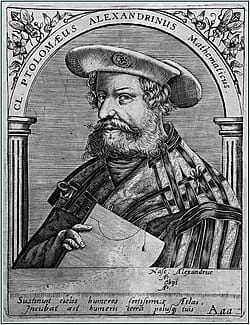
Claudius Ptolemy (c. 100–170 CE) was a Greco‑Roman mathematician, astronomer, geographer, and astrologer who lived and worked in the intellectual hub of Alexandria, Egypt. While he’s famous for his astronomical masterpiece, the Almagest, which described a geocentric model of the universe, his equally influential contribution to astrology is the Tetrabiblos (Greek for “Four Books”).
Ptolemy wasn’t the first to study astrology—Babylonian, Egyptian, and earlier Greek traditions existed—but he was the first to systematically organize its principles into a coherent, philosophical system. His goal was to present astrology as a rational, natural science, grounded in observable celestial cycles and Aristotelian physics. In other words, he wanted to move astrology away from mere fortune‑telling and toward a disciplined study of cosmic influences.
The Tetrabiblos: The “Bible” of Western Astrology
The Tetrabiblos is arguably the most important ancient text on astrology. Written in Greek around the mid‑2nd century, it consists of four books that cover:
- Book I: The philosophical and meteorological basis of astrology, defending its validity as a natural science.
- Book II: The influences of the fixed stars, planets, and signs on countries and general events (mundane astrology).
- Book III & IV: The calculation and interpretation of individual birth charts (genethlialogy), including the ascendant, lunar position, and planetary aspects.
Ptolemy’s approach was remarkably methodical. He dismissed techniques that lacked an astronomical basis, focusing instead on “the science of the aspects of the stars to the places with which they have familiarity”. He linked planetary movements to the four Aristotelian qualities (hot, cold, wet, dry) and to seasonal changes, arguing that celestial bodies affected earthly matters through subtle environmental shifts.
The Tetrabiblos was translated into Arabic in the 9th century and into Latin in the 12th century, becoming the cornerstone of medieval Islamic and Christian astrology. It was taught in universities for centuries and remained a standard reference for Renaissance astrologers. As one modern scholar put it, the Tetrabiblos “enjoyed almost the authority of a Bible among the astrological writers of a thousand years or more”.
The Harsh Realities of Ancient Astrological Practice
Let’s be real: practicing astrology in Ptolemy’s time was incredibly difficult. Imagine trying to calculate a birth chart without a computer, or even a reliable clock. Ancient astrologers had to:
- Gather precise birth data – often limited to the day and approximate hour, if that.
- Perform manual astronomical calculations – using tables (like Ptolemy’s own Handy Tables) to determine planetary positions, a process that could take hours or days.
- Interpret without standardized references – while the Tetrabiblos provided principles, much relied on the astrologer’s own experience and intuition.
Errors were common, and access to accurate ephemerides (planetary position tables) was limited. Only the wealthy could afford a detailed birth chart reading. For most people, astrology was a general, often unreliable, guide.
Ptolemy’s Enduring Legacy in Modern Astrology
Despite the challenges, Ptolemy’s framework proved remarkably durable. Many concepts he systematized are still used today:
- The twelve zodiac signs and their qualities.
- The importance of the Ascendant (the sign rising on the eastern horizon at birth).
- Planetary aspects (like conjunctions, sextiles, squares, and trines).
- The lunar influence on emotions and instincts.
Modern astrology apps essentially automate Ptolemy’s calculations. When you use an app like Astral Lens to generate your free birth chart, you’re leveraging the same astronomical principles Ptolemy outlined—but in milliseconds, not days.
From Ancient Scrolls to Modern Apps: The Astral Lens Revolution
This is where the story gets exciting. While Ptolemy laid the theoretical groundwork, today’s technology has democratized astrology. With the Astral Lens app, you can:
- Generate a detailed birth chart in seconds – just enter your birth date, time, and location.
- Get a free, personalized horoscope – updated daily based on your unique chart.
- Explore compatibility – see how your chart interacts with a partner’s for love compatibility insights.
- Understand your Sun, Moon, and Ascendant – learn the difference between your solar sign and ascendant and how your lunar position shapes your inner world.
No more manual calculations, no more guesswork. The app does the heavy lifting, allowing you to focus on interpretation and self‑discovery. It’s like having Ptolemy’s Tetrabiblos and a team of astronomers in your pocket.
Conclusion: Honoring the Past, Embracing the Future
Claudius Ptolemy’s legacy is a testament to humanity’s enduring desire to understand our place in the cosmos. He transformed astrology from a scattered collection of practices into a structured, philosophical discipline. Today, we stand on his shoulders, using tools he could never have imagined to explore the same celestial mysteries.
If you’re curious to experience the fusion of ancient wisdom and modern technology, download the Astral Lens app (available on Google Play). Generate your free birth chart, discover your ascendant and Moon sign, and start your own astrological journey. The stars have guided us for millennia—now they’re more accessible than ever.
References
- Tetrabiblos. (n.d.). In Wikipedia. Retrieved January 11, 2026, from https://en.wikipedia.org/wiki/Tetrabiblos
- Ptolemy. (n.d.). In Wikipedia. Retrieved January 11, 2026, from https://en.wikipedia.org/wiki/Ptolemy
Note: The above references follow a simplified academic format. For full citation details, consult the linked Wikipedia pages.