Why Your Birth Chart Starts with the Sun’s Path, Not Earth’s Middle
If you’ve ever had your birth chart calculated, you might imagine astrologers drawing lines between actual stars in the night sky. The truth is more mathematically fascinating—and it begins with a fundamental choice that separates serious astrological calculation from mere celestial guesswork. See, the universe doesn’t come with astrological coordinates pre-drawn; we choose our reference plane, and that choice changes everything about how we interpret planetary influences.
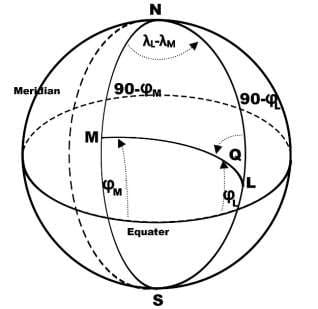
Here at Astral Lens, we believe understanding the spherical trigonometry behind your chart isn’t just academic—it’s what separates accurate, meaningful interpretations from generic horoscopes. When our astral chart calculator processes your birth information, it doesn’t default to the simple equatorial system used in basic astronomy. Instead, it honors astrological tradition and mathematical precision by referencing the ecliptic plane—the actual path the Sun appears to travel throughout the year.
Think of it this way: if astrology is about how planetary bodies influence life on Earth, shouldn’t we use the celestial plane that actually contains those planets? The answer, confirmed by centuries of astrological practice and solid mathematics, is a resounding yes. This commitment to accuracy is why our Android astrology app generates charts that seasoned astrologers trust alongside beginners learning celestial mechanics.
The Historical Divide: Two Systems, One Truth
To understand why the ecliptic versus equator debate matters, we need to travel back to the foundations of Western astrology. Ancient Babylonian astrologers—meticulous astronomical observers—first documented the Sun’s path through what we now call the zodiac constellations around 1000 BCE . Their fundamental insight was recognizing that the planets, Moon, and Sun all move within a narrow band approximately 8-9 degrees wide centered on the Sun’s apparent path.
When Greek astronomers like Hipparchus (c. 190-120 BCE) began applying mathematical rigor to celestial observations, they faced a critical choice: use the celestial equator (an extension of Earth’s equator into space) or the ecliptic (the Sun’s apparent path) as their primary reference plane . The problem was immediately apparent to anyone tracking planetary positions—planets don’t respect the celestial equator. They follow paths inclined to it, clustering instead along the ecliptic plane.
The Ptolemaic system that dominated Western and Islamic astronomy for over a thousand years made its choice unequivocally: the ecliptic was supreme for astrological calculation. In his seminal work Tetrabiblos, Claudius Ptolemy (c. 100-170 CE) explicitly structured his entire system of houses, aspects, and planetary interpretation around ecliptic coordinates . This wasn’t arbitrary preference—it reflected the observational reality that the zodiac itself is defined by constellations lying along the ecliptic path, not the equatorial belt.
Spherical Trigonometry: The Mathematics of Cosmic Interpretation
Now, let’s get into the mathematical heart of the matter—the spherical trigonometry that makes accurate chart calculation possible. Spherical trigonometry differs from the plane geometry we learn in school because it deals with triangles drawn on spherical surfaces, like the celestial sphere surrounding Earth.
When we calculate planetary positions using equatorial coordinates (based on the celestial equator), we’re essentially mapping three-dimensional planetary positions onto a two-dimensional chart using a system that doesn’t align with the planets’ actual movements. The conversion requires complex calculations involving:
- Right ascension (measured along the celestial equator)
- Declination (measured perpendicular to the equator)
- Obliquity of the ecliptic (the 23.5° tilt between ecliptic and equator)
The problem? Planets don’t move along lines of right ascension—they track the ecliptic. So to place them accurately in your birth chart using equatorial coordinates, we’d need to constantly convert between systems, introducing unnecessary mathematical complexity and potential errors.
The ecliptic system simplifies this dramatically by using:
- Celestial longitude (measured along the ecliptic)
- Celestial latitude (measured perpendicular to the ecliptic)
Since planets rarely stray more than a few degrees from the ecliptic plane, their celestial latitude is often negligible, making the mathematical representation cleaner and more directly aligned with astrological tradition.
Why This Technical Distinction Matters for Your Birth Chart Interpretation
You might be wondering whether this mathematical distinction actually affects chart interpretation. The answer is absolutely—and in ways that touch every aspect of your astrological profile.
Consider planetary aspects—those critical angular relationships between celestial bodies in your chart. When we calculate a trine (120°) or square (90°) aspect, we’re measuring angular separation along the ecliptic circle, not through three-dimensional space. Two planets might appear close together in the night sky (thus having a small equatorial separation), but if they’re far apart in ecliptic longitude, their astrological influence doesn’t form a classical aspect.
The house system division—perhaps the most personalized part of your birth chart—depends entirely on this ecliptic framework. Your Ascendant (or rising sign) is actually the ecliptic degree rising on the eastern horizon at your moment of birth. The Midheaven, while related to the meridian (a equatorial concept), is typically projected onto the ecliptic for consistent interpretation within the two-dimensional chart.
Modern astrology software Android tools sometimes obscure these technical choices, but at Astral Lens, we believe transparency matters. Our birth chart app calculations explicitly use the ecliptic reference because we’re committed to delivering not just aesthetically pleasing charts, but mathematically sound interpretations.
The Astral Lens Difference: Precision in Your Pocket
In developing our astral chart calculator, we faced the same fundamental choice that ancient astrologers did: take computational shortcuts or honor the mathematical foundations of the tradition. We chose the latter—and made it accessible through our mobile astrology app.
Whether you’re using our numerology calculator Android component, exploring iChing divination app features, or generating complete birth charts, the underlying mathematics remains rigorously ecliptic-based. This commitment extends to our tarot card reading on mobile integration, where we maintain the symbolic accuracy that parallels the mathematical precision of our chart calculations.
For those interested in comparative systems, our Chinese lunar calendar app features demonstrate how different astrological traditions handle similar mathematical challenges—always with respect for their original computational methods.
Experience the Difference Precision Makes
The path to meaningful astrological insight begins with mathematical integrity. When you download our horoscope mobile application or use our Calculadora de Mapa Astral, you’re not just getting another generic fortune-telling apps for Android—you’re accessing a tool built on centuries of astrological wisdom combined with contemporary computational accuracy.
We invite you to download at Google Play our Astral Lens application and experience the difference that proper spherical trigonometry makes in your birth chart interpretation. Discover why thousands of astrology enthusiasts trust our zodiac compatibility app and daily horoscope Android app for insights that blend mathematical precision with interpretive depth.
Your cosmic blueprint deserves more than computational shortcuts—it deserves the accuracy that comes from honoring astrology’s mathematical foundations.