Have you ever met someone and felt an instant, profound connection—a sense of knowing them deeply, as if your souls were in conversation long before you ever spoke? Or perhaps you’ve experienced a relationship where, despite your best efforts, you just couldn’t seem to harmonize, like two instruments playing in different keys. This isn’t just chemistry or friction; this is the ancient art of synastry at work.
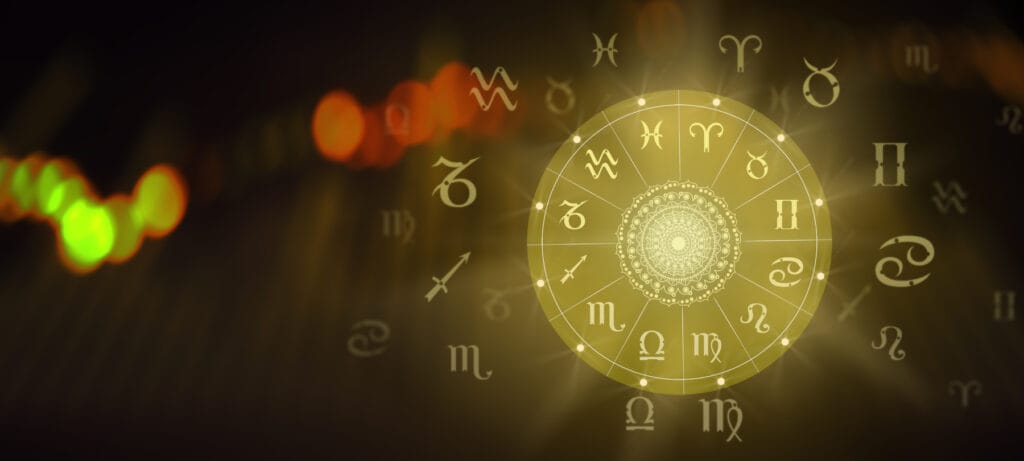
Synastry, the art of comparing two birth charts, reveals the soul-level blueprint of any relationship. By overlaying the planets, points, and houses from one natal chart onto another, we can map the celestial dynamics that shape our bonds. In this guide, we’ll explore everything you need to know to create and interpret these powerful charts, from their historical roots to the practical steps you can take today. And here’s the best part: with modern tools, performing this once-complex analysis is more accessible than ever.
A Brief History: From Kings to Couples
The practice of comparing charts, known historically as “synastry” (from the Greek syn, meaning “together,” and astron, meaning “star”), has roots that extend deep into antiquity. While popular culture often reduces it to “love compatibility,” its original use was profoundly political.
- Ancient Foundations: In the Hellenistic period, astrologers used chart comparison to assess the relationship between a king and his kingdom or between potential allies. The focus was on power dynamics, support, and potential conflict.
- Medieval & Renaissance Evolution: During these eras, the practice was refined by scholars in the Islamic world and later in Europe. It began to be applied more personally, examining the charts of family members or marriage partners to predict the nature of the union. Key texts from these periods laid the groundwork for the aspect-based analysis we use today.
- Modern Application: The 20th century, with the rise of humanistic and psychological astrology, transformed synastry into a tool for understanding the deep psychological interplay between individuals. Pioneers like Liz Greene and Stephen Arroyo framed synastry not as a deterministic verdict, but as a map of the relationship’s potential, challenges, and soul contracts.
This rich history reminds us that synastry is more than a simple compatibility score; it’s a sophisticated language for decoding the multifaceted dance between two people.
The Core Mechanics: What You’re Actually Comparing
When you create a synastry chart, you’re creating a dialogue between two celestial maps. The most telling insights come from a few key interactions:
| Aspect/Overlay | What It Reveals | Example & Feeling |
|---|---|---|
| Personal Planet Contact (e.g., your Venus conjunct their Mars) | The engine of attraction, affection, and day-to-day interaction. These create the “spark” and the feel of the relationship. | “We just get each other’s sense of humor and love language.” |
| Moon Connections | Emotional compatibility, gut-level comfort, and how you nurture each other. This is the foundation of feeling “at home.” | “I can be completely vulnerable with them; they understand my moods.” |
| Saturn Contacts | The structure, lessons, and longevity of the bond. These can feel restrictive or provide enduring stability. | “This relationship challenges me to grow up and commit, even when it’s hard.” |
| House Overlays (Your planet in their house) | The area of life where a person’s energy is most activated by the other. | If your Sun falls in their 7th House, you may naturally energize their approach to partnerships. |
The most potent synastry charts aren’t about having all “easy” aspects. In fact, a compelling bond often features a mix of harmonious trines and sextiles (which provide flow) with more dynamic squares and oppositions (which provide chemistry, challenge, and growth). A relationship with only easy aspects might be pleasant but lack passion and transformative potential.
Your Step-by-Step Guide to Creating a Synastry Reading
Ready to dive in? Here’s a clear, beginner-friendly process to follow. To start, you’ll need the exact birth date, time, and location for both people. Time is especially crucial for accurate house cusps and Moon positions.
- Calculate the Natal Charts: First, you need two precise birth charts. This is where accuracy is non-negotiable. Even a small error in time can shift house cusps, changing where your planets land in their chart. For reliable calculations, many modern astrologers and students turn to dedicated tools like the Astral Lens app, which uses high-precision astronomical algorithms to generate accurate charts directly on your device—a crucial first step.
- Cast the Synastry Chart: Using astrology software or an app, generate a two-chart composite view. This will typically show both wheels, a list of inter-chart aspects, and a grid displaying house overlays.
- Start with the “Big Three” Overlay: Look at where each person’s Sun, Moon, and Ascendant fall in the other’s chart houses. This quickly tells you: How does my core self (Sun) affect their life domain? How does my emotional nature (Moon) interact with their world? How does my approach to life (Ascendant) color their first impression of me?
- Analyze the Major Aspects: Focus on the conjunctions, squares, trines, and oppositions between these key planets: Sun, Moon, Mercury, Venus, Mars, Jupiter, and Saturn. A Venus-Mars connection often speaks to romantic chemistry, while Moon-Saturn contacts speak to emotional responsibilities.
- Synthesize the Story: This is the art. Don’t just list aspects. Ask: What is the overarching theme? Is this a relationship of passionate, Mars-ruled action? Or of deep, transformative Pluto-themed healing? Weave the aspects and overlays into a coherent narrative about the relationship’s purpose and potential.
Think of it this way: a birth chart is your personal blueprint, a synastry chart is the architectural plan for the bridge you build between two souls. It shows the points of connection, the potential stress points, and the overall design of your shared space.
Beyond Romance: The Expansive Power of Synastry
While love compatibility is a popular application, synastry’s utility is far broader. It can illuminate:
- Family Dynamics: Why you clash with one parent but understand another effortlessly. A Sun-Square-Sun aspect might explain a fundamental difference in core identity with a sibling.
- Professional Partnerships: Whether a business collaboration has the right mix of drive (Mars), vision (Jupiter), and disciplined structure (Saturn) to succeed.
- Friendships: That friend who feels like a “soul sibling” might have a strong Node or Moon connection to your chart.
Conclusion: The Map is Not the Territory
Synastry provides an unparalleled map of a relationship’s energetic landscape. It names the unspoken currents of attraction, pinpoints sources of friction, and highlights pathways for growth. It can validate your feelings with celestial clarity and offer a framework for understanding even the most confusing connections.
However—and this is crucial—the chart is a map of potential, not a fixed destiny. It shows the weather patterns, but you are still the captain of the ship. A challenging square can be a source of creative tension that fuels a great partnership, just as an easy trine can be taken for granted and left undeveloped.
The beauty of modern astrology is that the tools for this deep exploration are at our fingertips. For students, enthusiasts, and even professionals looking to manage client work, having a reliable, precise, and accessible way to generate and study these charts is foundational. It allows the astrologer to focus on the sacred work of interpretation and guidance, supported by trustworthy data. In the end, synastry reminds us that our relationships are cosmic conversations, and with the right lens, we can learn to understand their profound and beautiful language.