The Book That Shaped the Stars
Hey there, stargazers and cosmic explorers! Have you ever wondered where the core concepts of your daily horoscope, birth chart, or zodiac compatibility readings actually come from? The journey of Western astrology is a long and fascinating one, and it all leads back to a single, foundational text written under the Alexandrian sun nearly two millennia ago.
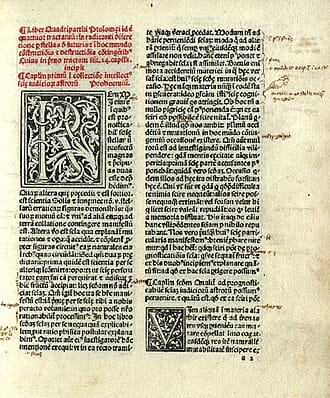
Today, we’re diving deep into the Tetrabiblos, the magnum opus of Claudius Ptolemy. This isn’t just a dusty old manuscript; it’s the very bedrock of astrology as we know it. So, whether you’re a curious newbie checking your horoscope of today, a student studying zodiac signs, or a seasoned pro interpreting a detailed birth chart, understanding the Tetrabiblos is like finding the source code of the cosmic program.
Who Was Claudius Ptolemy? The Scholar Behind the System
Before we unpack his book, let’s meet the man himself. Claudius Ptolemy was an Egyptian scholar of Greek heritage who lived and worked in Alexandria around 90-168 CE. While he’s famous for the geocentric Almagest, his astronomical masterpiece, he saw astrology as its essential companion—the study of how those celestial movements actually play out on Earth.
Ptolemy wasn’t necessarily inventing brand new techniques. His genius was that of a brilliant organizer and philosopher. He took the vast, often disparate, astrological traditions of the Mesopotamian and Hellenistic worlds and wove them into a single, coherent, and logical system. He aimed to elevate the practice from pure mysticism into a structured study that could be rationally defended and studied.
The Four Books: A Blueprint for Cosmic Influence
So, what’s in this legendary text? The name Tetrabiblos literally means “Four Books” in Greek, and that’s exactly what it is—a four-part manual.
- Book I: The Philosophical Foundation. This is where Ptolemy makes his case. He presents a philosophical defense of astrology, arguing that if astronomy studies the motions of the planets, then astrology rightfully studies the effects of those motions. He establishes core principles using the Aristotelian qualities (hot, cold, wet, dry) to explain planetary influences and dismisses practices he deemed nonsensical or without a clear celestial basis.
- Book II: Astrology of the World (Mundane Astrology). This section zooms out to the big picture. It deals with nations, weather, and global events. Ptolemy links specific zodiac signs and planets to different countries and discusses how eclipses and comets might influence collective destinies. It’s a reminder that astrology, for him, was as much about world events as personal fate.
- Book III & IV: The Birth Chart and the Personal Life. Here’s where it gets personal—the origin of what we now call the natal chart or birth chart. Book III focuses on the beginning of life: conception, birth, and the core factors of an individual’s destiny, including lifespan, physique, and temperament. Book IV gets into the specific areas of life: wealth, career, marriage, children, and travel—topics we still associate with the different “houses” in a modern astrology chart.
A Legacy Forged in Translation: How the Tetrabiblos Conquered the World
The true test of a work’s importance is its journey. The Tetrabiblos didn’t just sit on a library shelf in Alexandria.
- Into the Islamic World: By the 9th century, it was translated into Arabic, becoming the most influential text on astrology in the medieval Islamic world.
- Into Medieval Europe: A Latin translation followed in the 12th century. Remarkably, Ptolemy’s rational, natural-philosophy approach helped astrology gain theological tolerance from thinkers like Albertus Magnus and Thomas Aquinas. This allowed it to be taught in European universities for centuries, often alongside medicine.
- The Renaissance and Beyond: It became a required textbook, shaping the entire Western astrological tradition through the Renaissance. Even as astronomy moved on from Ptolemy’s geocentric model, the Tetrabiblos remained a cornerstone of astrological theory. As scholar Franz Boll noted, critics of astrology often argued against points that Ptolemy had already thoughtfully addressed and systematized.
The Tetrabiblos in Your Pocket: Ancient Wisdom Meets Modern Tech
Here’s the beautiful part for us today: the complex system Ptolemy so meticulously outlined is no longer locked in a heavy tome or requiring decades of study. The core framework he established—planets in signs, chart aspects, and life topics linked to celestial positions—is the very same framework used by modern astrology apps.
Think about the questions that bring people to astrology:
- “What’s my rising sign?” (That’s the Ascendant, a pillar of the natal chart detailed by Ptolemy).
- “How do I interpret my birth chart?” (You’re engaging with the system he compiled).
- “What’s our love compatibility based on our signs?” (You’re exploring the planetary relationships he categorized).
An app like Astral Lens is, in many ways, a direct descendant of the Ptolemaic tradition. It takes the intricate calculations of planetary positions (modernized with our current astronomical data) and the interpretive framework for sun signs, moon signs, and ascendants, and delivers it with instant, accessible clarity. It democratizes what was once the domain of scholars, allowing anyone to explore their personalized horoscope and detailed birth chart with a few taps.
The Takeaway: Why a 2nd-Century Text Still Matters
Reading about the Tetrabiblos isn’t just a history lesson. It’s an invitation to appreciate the depth and intellectual heritage behind your astrological practice. It connects the dots between the ancient scholar in Alexandria gazing at the stars and you, checking your daily personalized horoscope on your phone.
It reminds us that astrology is a living tradition, one that has evolved yet remains rooted in a human desire to find pattern, meaning, and connection in the cosmos. Ptolemy gave that desire a structure—a language of symbols and correlations that continues to resonate, inspire, and guide seekers on their personal journeys to this very day.
Ready to explore the cosmic framework Ptolemy helped define? Download the Astral Lens app and discover your own place within this ancient, stellar story.