Have you ever wondered if the day you were born imprinted a cosmic signature on your soul? Or felt a shiver of recognition reading your daily horoscope? You’re not alone. For millennia, humans have looked to the stars for meaning, guidance, and a deeper understanding of their place in the universe. The horoscope is the most accessible gateway into this ancient practice. Far more than a newspaper prediction, it is a symbolic snapshot of the heavens, a personal map waiting to be read. Whether you’re a curious newcomer or a seasoned astrology enthusiast, understanding the horoscope is the first step to unlocking a richer dialogue with the cosmos.
What Is a Horoscope, Really? Beyond Sun Sign Predictions
Let’s start by clarifying a common mix-up. In everyday conversation, “horoscope” often refers to those brief, generalized forecasts for your zodiac sign you read with your morning coffee. In technical terms, however, a horoscope—also known as a birth chart, natal chart, or mapa astral—is something far more personal and profound.
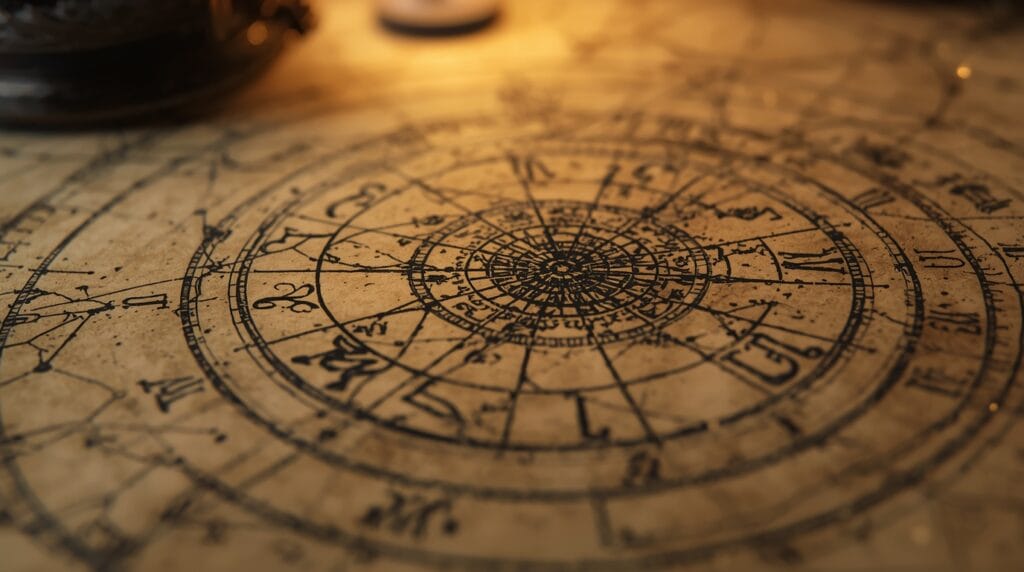
A true horoscope is a celestial blueprint calculated for the exact moment of your birth. It captures the positions of the planets, the Sun, and the Moon against the backdrop of the zodiac signs and the astrological houses. Think of it this way: if your Sun sign (like Cancer astrologia or Leo astrologia) is the headline of your life’s story, your complete birth chart is the entire novel, with all its complex characters, plot twists, and settings. This detailed chart forms the basis for all personalized astrology, from Vedic astrology charts to Western interpretations.
A Brief Stargazer’s History: From Babylonian Omens to Personal Insight
To appreciate the horoscope, we must journey back in time. The roots of astrology stretch over 4,000 years to ancient Mesopotamia, where Babylonian priests meticulously recorded celestial events, believing them to be divine messages affecting kingdoms and harvests. This was a collective, event-based astrology.
The major evolutionary leap to personal horoscopy began with the Hellenistic Greeks around the 1st century BCE. They synthesized Babylonian celestial data with Egyptian seasonal wisdom and Greek philosophical concepts, pioneering the system of the twelve zodiac signs as we know them and the mathematical framework for calculating individual birth charts. This revolutionary idea—that the specific sky at your birth holds meaning for your life—transformed astrology from a tool for rulers into a potential guide for every individual.
Deconstructing Your Cosmic Blueprint: Key Components of a Horoscope
A birth chart may look like a confusing wheel of symbols, but it’s built from a few core components. Understanding these turns the abstract into the understandable.
- The Planets: The cosmic actors. Each planet represents a fundamental drive or part of the human experience. The Moon governs emotions, Mars embodies action and desire, Venus rules love and values, and so on.
- The Zodiac Signs: The 12 archetypal styles or costumes. They color how a planet expresses its energy. A planet in fiery, dramatic Aries acts very differently than the same planet in practical, grounded Taurus.
- The Houses: The 12 sectors of the wheel, representing the various areas of life where the planetary drama unfolds. The First House relates to self and identity, the Seventh House to partnerships, the Tenth House to career and public standing, etc.
- The Aspects: The geometric angles between planets, indicating how the celestial actors communicate. Harmonious aspects (like trines) suggest ease, while challenging ones (like squares) point to tension and growth opportunities.
To visualize how these elements create a unique personality profile, consider the following simplified comparison:
| Component | Symbolic Role | Example Influence |
|---|---|---|
| Planet (The Actor) | Core drive or function (e.g., Venus = love, values) | What is expressed |
| Zodiac Sign (The Costume) | Style or mode of expression (e.g., Taurus = sensual, steady) | How it is expressed |
| Astrological House (The Stage) | Area of life (e.g., 7th House = partnerships, marriage) | Where it plays out |
Your Daily Horoscope: How Does It Work?
Now, what about the horoscope of the day you check online or in an app? This is a form of transit astrology. Astrologers take the current, real-time positions of the planets (transits) and compare them to the fixed positions in your birth chart. When a transiting planet forms a significant angle to a planet in your natal chart, it activates that part of your life, creating a theme or opportunity.
For instance, if transiting Jupiter (planet of expansion) moves over your natal Venus (planet of love), it could indicate a period of growth, luck, or joy in your relationships or creative pursuits. Your daily or weekly horoscope is a generalized forecast based only on the Sun sign, making it a broad-brush stroke. A truly personalized forecast requires your complete birth data.
Astrology vs. Astronomy: A Necessary Distinction
A respectful and accurate discussion of astrology must acknowledge its distinction from astronomy. Astronomy is the scientific study of celestial objects, space, and the physical universe. It is rooted in observation, measurement, and the scientific method. Astrology is a symbolic language and a metaphysical study of the presumed correlations between celestial patterns and human affairs. It operates in the realm of meaning, archetype, and interpretation. One is a science; the other is a humanities discipline, often described as a “cosmic psychology.” They originated from the same historical root but diverged paths centuries ago.
Bringing the Cosmos to Your Fingertips with Astral Lens
In the past, calculating a mapa astrológico required complex ephemeris tables and manual math. Today, technology makes this ancient wisdom instantly accessible. This is where modern tools like the Astral Lens app shine.
By entering your birth date, time, and location, a professional astrology app performs instant calculations to generate your precise astral chart. A quality app acts as both a calculator and an interpreter, helping you:
- Discover your full profile: Go beyond your Sun sign to learn your Moon sign, Ascendant (ascendent signo), and the ruler of your chart.
- Understand planetary placements: See which signos astrológicos and casas astrologia your planets occupy.
- Receive personalized insights: Get AI-assisted interpretations of your chart aspects and daily transits tailored to your unique blueprint.
- Explore different traditions: From Western natal charts to Vedic astrology principles.
The goal is not to tell you your fate, but to provide a detailed, symbolic mirror for self-reflection—a definição astrológica of you.
Embracing the Celestial Map: A Tool for Self-Understanding
So, what is a horoscope? It is a multifaceted tool: a historical artifact, a complex symbolic language, and a deeply personal map. Whether you approach it with the curiosity of a student, the passion of an enthusiast, or the scrutiny of a skeptic, its enduring power lies in its capacity to frame our human experience within a grand, cosmic narrative.
It encourages us to see patterns, reflect on our rhythms, and contemplate our connection to something vast. In the end, reading your horoscope—be it your full mapa astral or a thoughtful daily forecast—is less about prediction and more about profound self-awareness. It’s an invitation to embark on the greatest adventure of all: understanding yourself, under the light of the timeless stars.
Ready to discover the unique cosmic story written in your birth chart? Download Astral Lens for free from the Google Play Store and unlock your personal guide to the language of the stars.