So, you’ve downloaded a shiny new astrology app—maybe you’re curious about your sun, moon, and rising signs, or perhaps you want to dive deep into your natal chart. But then you open it, see a wheel filled with symbols, terms like “Part of Fortune” or “Chiron,” and a sudden thought hits you: Is this going to be too difficult to learn?
You’re not alone. This initial intimidation is a common experience for many astrology enthusiasts, from the casually curious to the dedicated student. The journey from a basic horoscope reader to someone who can interpret a complex birth chart can seem steep. However, with the right approach and tools—like modern mobile astrology apps—this learning curve is not only manageable but can be a profoundly rewarding adventure of self-discovery.
Why Astrology Feels Complex: It’s Not Just You
Let’s be honest: astrology is a vast and ancient language. It synthesizes astronomy, mythology, psychology, and symbolism. Traditionally, mastering it required textbooks, ephemerides (tables of planetary positions), and often a mentor. You’d manually calculate chart houses and aspects, a time-consuming process that itself was a barrier to entry.
This historical context is key. The perceived difficulty isn’t just about memorizing zodiac signs or planetary meanings; it’s about integrating a system with many moving parts: planets, signs, houses, and the angles between them. A 2020 study in the Journal of Scientific Exploration noted that the cognitive load of synthesizing these components is what often overwhelms beginners. Modern astrology software and Android astrology apps have fundamentally changed this by automating complex calculations, allowing the learner to focus on interpretation rather than computation.
Breaking Down the Learning Curve: A Phased Approach
Think of learning astrology not as climbing a sheer cliff, but as walking up a spiral staircase. You revisit core concepts at higher levels of understanding. Here’s a realistic breakdown of what to expect:
Phase 1: The Foundations (Weeks 1-4)
- Focus: Personal connection and basic vocabulary.
- What You’ll Learn: Your own sun, moon, and ascending sign, and what they mean. The basic qualities of the twelve zodiac signs and the planets in your chart.
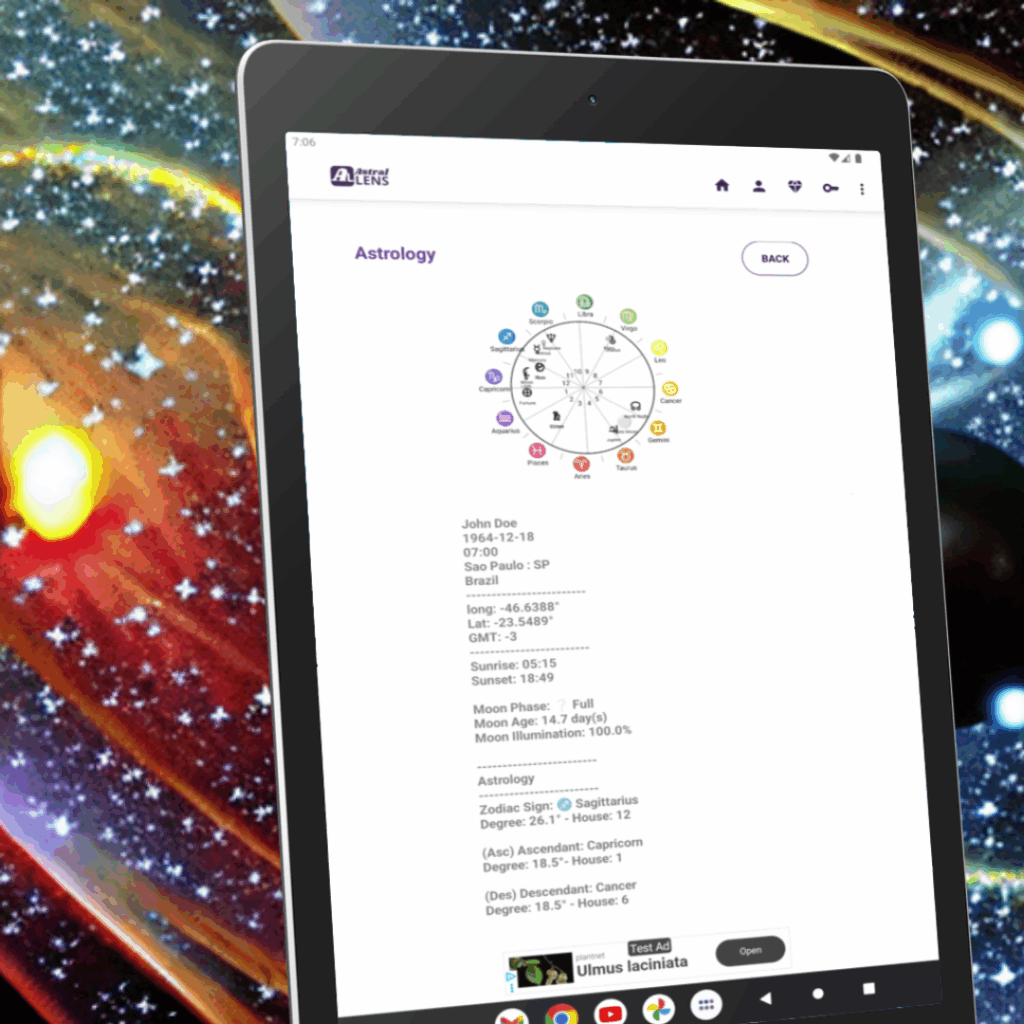
- The App’s Role: A good app acts as your personal guide here, generating your astral chart instantly and providing clear, digestible explanations for each element. Instead of a technical manual, you get a personalized report.
- Feeling: Excited, personal, and directly relevant. The learning is tied to your own life.
Phase 2: Seeing the System (Months 2-4)
- Focus: Understanding how the pieces interact.
- What You’ll Learn: What the astrological houses represent in life’s areas, and how a planet’s energy is modified by being in a certain sign and house. You’ll start to see the chart as a map rather than a list of parts.
- The App’s Role: Interactive features are crucial here. Look for apps that let you tap on a house or aspect for a detailed pop-up explanation. This on-demand learning prevents overwhelm.
- Feeling: Sometimes confusing (“Wait, so my Mars in Cancer is in the 10th house?”), but increasingly insightful as patterns emerge.
Phase 3: Synthesis & Practice (Ongoing)
- Focus: Putting it all together for nuanced interpretation.
- What You’ll Learn: Weighing different chart factors, understanding aspect patterns like stelliums or grand trines, and applying this knowledge to transits or synastry (relationship compatibility).
- The App’s Role: Advanced tools like transit calculators, synastry chart comparisons, and saved charts for friends/family become your practice lab. The app handles the math, you hone the art.
- Feeling: Confident, intuitive, and engaged in a lifelong study.
The table below summarizes this journey and how a well-designed app supports each stage:
| Learning Phase | Core Challenge | Traditional Method Barrier | How a Modern App (Like Astral Lens) Flattens the Curve |
|---|---|---|---|
| Foundation | Understanding personal chart basics | Manual calculation; fragmented information | Instant, accurate birth chart calculation with integrated, beginner-friendly explanations. |
| System Integration | Seeing how signs, planets & houses interact | Juggling multiple textbooks and resources | Interactive charts with click-to-learn elements and contextual tutorials. |
| Synthesis & Practice | Applying knowledge to new charts & transits | Requires advanced mathematical/astronomical knowledge | One-click tools for compatibility, daily transits, and progressions, turning theory into practice. |
The Modern App Advantage: Your Digital Tutor
Gone are the days of solitary, frustrating study. The best astrology apps for Android today are built with the learner in mind. They incorporate features that directly address the classic pain points of the learning curve:
- Interactive Charts: Tap on a symbol (Neptune, Virgo, the 8th house) for an immediate, concise explanation. This contextual learning is far more effective than flipping through a glossary.
- Step-by-Step Guides: Many apps offer structured learning paths or daily “lessons” that build knowledge incrementally, mirroring the phased approach outlined above.
- Community Features: Some apps include forums or community boards where you can ask questions, share insights, and learn from other users’ interpretations. This recreates the apprentice/study group model in a digital space.
- Accuracy & Speed: They eliminate the biggest initial hurdle—complex calculation—ensuring you start with a perfect natal chart or solar return chart in seconds.
Astral Lens: Designed for the Journey, Not Just the Destination
While many apps provide a birth chart calculator, the key to a gentle learning curve is in the delivery of information. An app that dumps a 50-page technical report on a beginner will cause frustration. One that reveals insights in stages, with clarity and beautiful design, empowers.
This is the core of a user-friendly experience. It’s about presenting the profound depth of astrology—from Vedic techniques to modern psychological astrology—in a way that feels accessible, not academic. It’s the difference between being given a telescope with no instructions and being guided on a curated tour of the cosmos.
The truth is, astrology apps are only as difficult as they are designed to be. The right one recognizes that you are on a path of discovery. It meets you where you are, provides the right tool at the right time, and turns the once-daunting astrological chart into a fascinating and interactive map of potential. The stars have always held their wisdom; modern technology is now simply handing you the key in a form you can easily grasp and use.
Ready to explore your cosmic blueprint with a guide that makes the journey clear? Download Astral Lens from Google Play and start your astrological education today.