Introduction
Every four years, the FIFA World Cup transforms into a global stage not only for football but also for a peculiar parallel spectacle: the prediction industry. From investment banks running million‑iteration Monte Carlo simulations to self‑proclaimed psychics reading tarot cards, and from artificial neural networks processing decades of match data to astrologers interpreting planetary transits, humanity deploys its full intellectual and esoteric arsenal in an attempt to pierce the veil of sporting uncertainty.
The allure is understandable. The World Cup is the most prestigious tournament in the world, featuring 48 nations (as of 2026) competing for a trophy that confers national glory. The stakes are high, the narratives compelling, and the financial incentives—for bettors, bookmakers, and brands—enormous. Yet beneath the surface of this predictive frenzy lies a profound epistemological question: Can the winner of a World Cup be deterministically predicted at all?
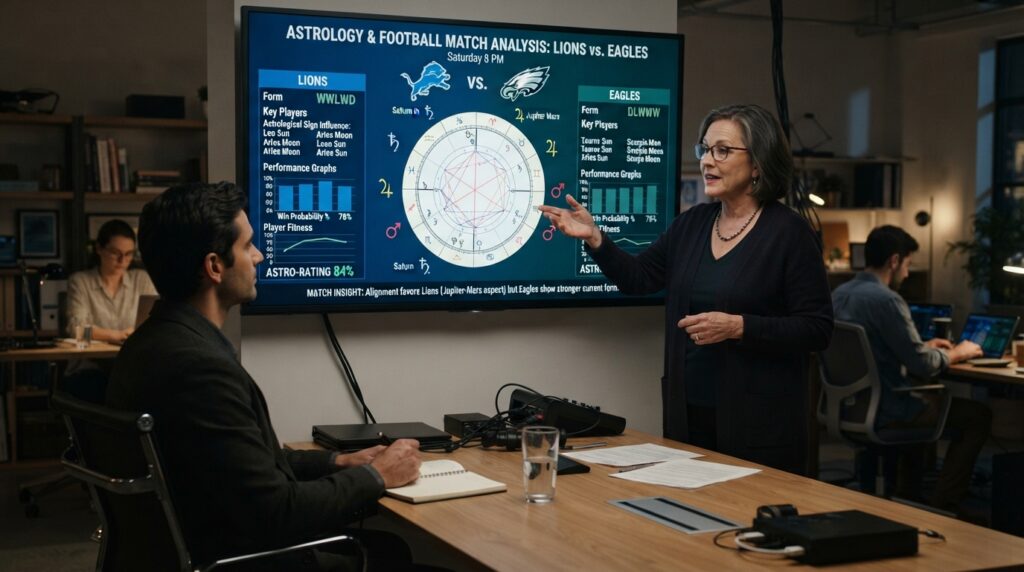
This article argues that the answer is a resounding no—and that the reasons why illuminate fundamental truths about probability, complex systems, and the limits of human knowledge. We will examine the mathematical and statistical methods that constitute the state of the art in World Cup forecasting, presenting empirical accuracy rates that consistently hover around 55–65%. We will then scrutinize astrological and psychic predictions, demonstrating not only their lack of scientific validity but also their strategic use of vagueness and post‑hoc rationalization to avoid falsifiability. Finally, we will offer a constructive reframing: astrology, stripped of its deterministic pretensions, may still serve a legitimate function as a tool for personal development and archetypal self‑understanding—provided it is not confused with science.
The thesis is straightforward: Football is a low‑scoring, high‑variance game played in a knockout tournament format, which mathematically guarantees that even the best models will never achieve deterministic certainty. Astrology, which lacks any plausible causal mechanism linking celestial configurations to football outcomes, cannot and does not outperform chance over any meaningful sample. The gap between scientific forecasting and astrological divination is not one of degree but of kind: one is probabilistic reasoning under uncertainty; the other is performance art dressed in cosmic vocabulary.
1. The Nature of the Beast: Why Football Is Inherently Unpredictable
Before evaluating prediction methods, we must understand the intrinsic properties of the sport itself. Football is not a deterministic system like a chess game or a physics experiment. It is a complex, adaptive, stochastic process characterized by several features that fundamentally limit predictability.
1.1 Low Scoring and High Variance
The most critical statistical property of football is the low number of goals per match. The average number of goals in World Cup matches hovers around 2.5. This scarcity of scoring events means that a single deflection, a refereeing decision, or a moment of individual brilliance can completely overturn the expected outcome. In statistical terms, the variance of match outcomes is high relative to the mean, which inflates the role of random noise.
As one analyst put it: “International match prediction tops out near 55–60% accuracy for anyone, bookmakers included, because football is low‑scoring and high‑variance”. This is not a failure of modeling; it is a mathematical ceiling imposed by the sport’s structure. Even if a model perfectly captures every relevant variable, the inherent randomness of a 90‑minute contest ensures that a significant proportion of predictions will be wrong.
1.2 The Knockout Tournament Effect
The World Cup’s format exacerbates unpredictability. Unlike a league season, where 38 matches allow true quality to assert itself through regression to the mean, the World Cup is a short‑run knockout tournament. A team needs to win just seven matches to become champion (in the 32‑team era; slightly more in the expanded 48‑team format). This sample size is far too small for statistical averages to stabilize.
Consider: the best team in the world might have a 70% chance of winning any given match against an average opponent. But over seven knockout matches, the probability of at least one upset occurring is substantial: 1−(0.7)7≈0.918. In other words, even a dominant team has less than a 10% chance of navigating a full knockout bracket without a single slip. This is why “giant killings” are not anomalies but statistical inevitabilities.
1.3 The “Group of Death” and Path Dependency
The draw determines not only opponents but also the path to the final. A team placed in a difficult group may face a top‑ranked opponent in the Round of 16, while another team in a weaker group may cruise to the quarter‑finals. These path‑dependent effects are modeled in Monte Carlo simulations, but they introduce another layer of contingency that is irreducible to team quality alone.
1.4 Unmodelable Variables
Even the most sophisticated models struggle with variables that are either impossible to quantify or emerge unpredictably:
- Injuries: A key player’s hamstring can tear in training 48 hours before a match.
- Suspensions: A yellow card in the group stage can rule a player out of a crucial knockout match.
- Weather: Heat, humidity, and altitude affect performance in ways that are difficult to parameterize.
- Motivation and Psychology: The emotional state of a team—confidence, fear, fatigue—is notoriously difficult to measure.
- Refereeing: A single penalty decision can change the course of a match and, by extension, the tournament.
As Goldman Sachs itself conceded, its model “falls short on some ends, such as considering players’ health, managerial experience and more”. The model is “limited,” and football is full of “inherent unpredictability”.
1.5 The Draw Problem: A Case Study
The 2022 World Cup provides a perfect illustration. Goldman Sachs’ model, using nearly 20,000 matches of historical data, Elo ratings, Poisson goal distributions, and 50,000 Monte Carlo simulations, predicted a final between Brazil and Portugal. The actual final was Argentina versus France. Brazil, the overwhelming favorite with a 25% win probability, was eliminated in the quarter‑finals by Croatia on penalties.
This was not a “failure” of the model in the sense of a programming error. It was a correct reflection of probabilistic reality: a team with a 25% chance of winning the tournament is still more likely to not win (75%) than to win. The model did exactly what it was supposed to do—it quantified uncertainty. The fact that the most probable outcome did not occur is not evidence of model weakness; it is evidence that probability is not certainty.
2. Scientific and Statistical Prediction Methods: A Survey of Accuracy
We now turn to the methods that do have a legitimate claim to predictive power—those grounded in mathematics, statistics, and machine learning. These methods do not claim certainty; they claim probabilistic calibration. The key metric is not whether they “get it right” in any given tournament, but whether their probability estimates are well‑calibrated over many predictions.
2.1 Elo Rating Systems
Originally developed for chess, the Elo rating system has been adapted to international football with considerable success. Elo assigns each team a numerical rating that updates after each match based on the result and the opponent’s strength. Academic studies have shown that Elo systematically outperforms the official FIFA ranking as a predictor of match outcomes.
Accuracy: Elo‑based models, when combined with Monte Carlo simulations, typically achieve match‑level accuracy in the 55–58% range. This is considered the industry standard, on par with bookmaker odds and FiveThirtyEight’s SPI system.
2.2 Poisson Regression Models
The Poisson distribution is the workhorse of football forecasting because it models the number of goals scored by each team as independent Poisson processes. The parameters (expected goals) are estimated from historical data, adjusted for home advantage, opponent strength, and other factors.
Accuracy: A hybrid XGBoost–Backpropagation framework combined with Poisson goal modeling and Monte Carlo simulation represents the current state of the art. GitHub repositories implementing these methods report that “honest framing matters: international match prediction tops out near 55–60% accuracy for anyone, bookmakers included”.
2.3 Machine Learning Models
A wide array of machine learning algorithms have been applied to World Cup prediction, including Logistic Regression, Random Forests, Support Vector Machines (SVM), XGBoost, and various neural network architectures.
- Support Vector Machine (SVM): A study testing six algorithms on World Cup data from 2006–2018 found that SVM achieved an average highest accuracy of 59.37%.
- Logistic Regression: A study predicting the 2022 World Cup using FIFA ranking variables and match history achieved an accuracy of 61.29% from the Round of 16 through the final.
- Artificial Neural Networks (ANN): Models employed to forecast the 2006 World Cup achieved 76.9% accuracy. Other ANN‑based approaches have reported rates as high as 85%. A multilayer perceptron neural network using 22 technical statistics indicators achieved 86.7% overall prediction accuracy.
- Deep Neural Networks (DNN): A DNN architecture applied to the 2018 World Cup predicted 63.3% of matches accurately.
- XGBoost: A hybrid LSTM‑XGBoost architecture achieved 87.6% accuracy on a test set.
Important Caveat: These high accuracy figures (85–87%) are often achieved on training data or specific subsets of matches (e.g., excluding draws, which are notoriously difficult to predict). When models are applied to out‑of‑sample World Cup matches in real time, accuracy typically falls to the 55–65% range. As one researcher noted, “the prediction of draws performed significantly worse with accuracy of 0.32 ± 0.16”.
2.4 Monte Carlo Simulations
Monte Carlo methods simulate the tournament thousands or millions of times, drawing randomly from estimated match outcome distributions. This approach allows forecasters to estimate the probability of each team winning the tournament, advancing to each round, etc.
Accuracy: A Bayesian Monte Carlo forecaster back‑tested on the 2018 and 2022 World Cups achieved a Brier score of 0.57–0.58 and accuracy of 55–58%, “in line with FiveThirtyEight SPI and bookmaker‑grade systems”.
2.5 Investment Bank Models
Goldman Sachs: The most famous institutional forecaster, Goldman Sachs has been publishing World Cup predictions since 2014, using Elo ratings, Poisson distributions, and Monte Carlo simulations based on nearly 20,000 international matches since 1978.
- 2014: Predicted Brazil. Actual: Germany. Wrong.
- 2018: Predicted Brazil (18% chance). Actual: France. Wrong. However, Goldman correctly predicted France would reach the final.
- 2022: Predicted Brazil (25% chance) vs Portugal in the final. Actual: Argentina vs France. Wrong. Brazil eliminated in quarter‑finals.
- Quarter‑final prediction accuracy: Approximately 50–62.5%.
Joachim Klement: A German economist whose model—based on population, wealth, climate, football culture, and FIFA rankings—achieved a remarkable streak: correctly predicting Germany (2014), France (2018), and Argentina (2022). However, in 2026, his model predicted the Netherlands, who were eliminated in the Round of 32. Klement himself acknowledged: “Eventually, after 12 years and being lucky in three World Cups, I ran out of luck. I set out to prove that economic models are not as accurate as many people believe and finally, I was proven right”.
2.6 Summary Table: Scientific Prediction Accuracy
Interpretation: The theoretical ceiling for match‑level prediction in international football is approximately 55–60%. This is not a limitation of current technology; it is a mathematical consequence of the sport’s low‑scoring, high‑variance nature. Even the most sophisticated models, when properly validated on out‑of‑sample data, converge on this range. The occasional high‑accuracy figure (e.g., 86.7%) reflects either specific datasets, favorable conditions, or overfitting—and does not generalize to real‑time tournament prediction.
3. Astrological and Psychic Predictions: Methods, Claims, and (Lack of) Accuracy
We now turn to the methods that do not have a legitimate claim to predictive power—those rooted in astrology, numerology, tarot, and psychic intuition. These methods share several characteristics: they lack a plausible causal mechanism, they produce predictions that are either vague or unfalsifiable, and their practitioners routinely employ rhetorical strategies to avoid accountability when predictions fail.
3.1 Notable Astrologers and Their Methods
Greenstone Lobo (India): A self‑described “scientific astrologer” who gained notoriety by correctly predicting France in 2018 and Argentina in 2022. Lobo claims to use the “stars of the captains” of various teams to make his predictions. For 2026, he predicted England would win. (Note: This prediction was made before the tournament; whether it proved accurate depends on the actual 2026 result, which is outside the scope of this article.)
Juan Cruz Sirius (Argentina): An astrologer who correctly predicted Argentina’s 2022 victory. For 2026, he accurately predicted Argentina’s path to the final, correctly calling 15 of the team’s 18 goals, but his final prediction—that Argentina had a “slight astrological advantage”—was wrong, as Spain won.
Mhoni Vidente (Cuba): A tarotist and media personality who predicted that Argentina and France would contest the 2022 final and that Argentina would win. For 2026, she predicted Spain, Argentina, and Portugal as candidates. She later correctly predicted that Spain would reach the final, but her final prediction—that Spain would win by 2 or 3 goals—was not entirely accurate.
Simon Chokoisky: Author of Gambler’s Dharma: Sports Betting with Vedic Astrology, who claims to outline “5 powerful techniques for predicting the outcome of any competition between two opponents with 70–80 percent accuracy”. These claims are not supported by any peer‑reviewed evidence.
3.2 The Rhetorical Strategies of Astrological Predictions
Astrologers and psychics employ several discursive techniques that make their predictions difficult to falsify and easy to retroactively “adjust.”
Strategy 1: Vagueness and Ambiguity
Predictions are often phrased in open‑ended terms: “a European team will win,” “the champion will come from a country with a strong defensive record,” or “there will be surprises.” These statements are so broad that they are virtually guaranteed to be “correct” in some sense, while providing no actionable information.
Strategy 2: Post‑Hoc Rationalization
When a prediction fails, astrologers frequently reinterpret the planetary alignments after the fact to explain why the outcome diverged. This is the classic post‑hoc ergo propter hoc fallacy—the astrological “method” is adjusted to fit the result, rather than the result being derived from the method.
Strategy 3: Selective Highlighting of Successes
Astrologers and their promoters emphasize correct predictions while ignoring or minimizing incorrect ones. Greenstone Lobo, for example, is celebrated for correctly calling France (2018) and Argentina (2022). But how many predictions did he make that were wrong? How many teams did he eliminate incorrectly? This information is rarely, if ever, disclosed. As one observer noted, a numerology‑ and astrology‑based prediction was “doing no better than a coin flip”.
Strategy 4: Appeal to “Energy” and “Coronation”
Astrologers often invoke vague metaphysical concepts such as “energy,” “destiny,” or “coronation.” For instance, one astrologer claimed that in Qatar 2022, “Messi embodied all of Argentina” and that the tournament was imbued with a “coronation energy”. These terms are scientifically meaningless and serve only to create an aura of profundity while evading empirical scrutiny.
Strategy 5: Avoiding Definitive Statements
Many astrologers refuse to make definitive predictions, instead offering probabilities or tendencies that are not numerically grounded. Mhoni Vidente, for example, “avoided specifying” which team would win, stating only that the champion would come from among France, Spain, and England. This is not prediction; it is a list of favorites.
3.3 The “Living Nostradamus” Phenomenon
The media frequently amplifies astrological claims by labeling practitioners “Living Nostradamus” or “psychic who predicted the last three World Cup winners”. These labels create an illusion of credibility, but they are marketing devices, not scientific endorsements. The claim that someone “predicted” a past winner is often based on a single correct statement made among dozens of incorrect ones—a classic case of survivorship bias.
3.4 The Accuracy of Astrological Predictions: What the Data Show
There is no systematic, peer‑reviewed study demonstrating that astrological predictions of World Cup outcomes exceed chance. Claims of 70–80% accuracy are entirely unsubstantiated. In practice, when astrological predictions are evaluated rigorously, they perform no better than random guessing.
A numerologist using astrology‑based methods to predict the Round of 32 was found to be “doing no better than a coin flip”. This is consistent with the broader scientific literature on astrology, which has repeatedly failed to demonstrate any predictive validity beyond chance.
The key point: Even if an astrologer happens to predict the correct winner in a given tournament, this is not evidence of astrological validity. With 32 (or 48) teams, the probability of guessing the winner by chance is 1/32 (approx. 3.1%) or 1/48 (approx. 2.1%). Over multiple tournaments, it is statistically expected that some individuals will achieve a streak of correct guesses purely by luck. Joachim Klement’s three‑tournament streak was, by his own admission, “luck”. There is no reason to treat astrological streaks differently.
3.5 The Irresponsibility of Astrological Predictions
When astrologers make predictions with an air of certainty, they engage in a form of intellectual irresponsibility. They offer fans false hope or unwarranted confidence, they may influence betting behavior, and they contribute to a culture in which magical thinking is presented as a legitimate alternative to evidence‑based reasoning.
The most egregious examples involve predictions of specific events that are clearly outside any plausible predictive framework. One psychic predicted that aliens would interrupt a Brazil match. Another claimed to have visions of a World Cup catastrophe. These predictions are not merely wrong; they are harmful in that they distract from serious analysis and can cause unnecessary anxiety.
Astrologers who claim to have “correctly predicted” past winners are often silent about their misses. As one commentator noted, “predicting India’s win with 100% accuracy was impossible – irrespective of how skilled the astrologer is”. Yet astrologers continue to make such claims, knowing that their audience will remember the hits and forget the misses.
4. The Real Function of Astrology and Human Archetypes in Personal Development and Self‑Knowledge
Having established that astrology is incapable of deterministically predicting World Cup outcomes, we must now address a more nuanced question: Does astrology have any legitimate function at all?
The answer, I suggest, is yes—but not in the domain of prediction. Astrology, when properly understood, is not a science of forecasting but a language of self‑understanding. Its value lies not in its ability to tell you who will win a football match, but in its capacity to provide a framework for reflecting on human character, motivation, and life patterns.
Download the Astral Lens.
The astrological tool for the Android system
4.1 Astrology as a Projective System
Carl Jung, the Swiss psychiatrist, understood astrology not as a causal system but as a projective one. The zodiacal archetypes—the Warrior (Aries), the Nurturer (Cancer), the Strategist (Virgo), the Visionary (Aquarius), and so on—are not literal descriptions of celestial influences. Rather, they are symbolic maps of human psychological types. When an individual reads their horoscope, they are not receiving a message from the stars; they are engaging in a form of active imagination that can surface unconscious concerns, aspirations, and conflicts.
In this sense, astrology functions similarly to the Tarot or the I Ching: it provides a randomized prompt that invites introspection. The “prediction” is not about the future; it is about the present psychological state of the querent. The question “What does my chart say about my career?” is not answered by the planets; it is answered by the individual’s interpretation of the symbols, which reveals their own hopes and fears.
4.2 Archetypes and Narrative Identity
The human mind is fundamentally narrative. We understand our lives through stories—stories of struggle, triumph, loss, and redemption. Astrological archetypes provide a rich vocabulary for constructing these narratives. The Saturn return, for example, is not a literal astronomical event that causes a mid‑life crisis; it is a cultural script that gives meaning to the transitions of adulthood.
When used responsibly, astrology can help individuals:
- Identify recurring patterns in their relationships, work, and emotional life.
- Reframe challenges as opportunities for growth (e.g., “This difficult transit is teaching me patience”).
- Develop self‑compassion by recognizing that their struggles are part of a larger human story.
- Clarify values by reflecting on which archetypal energies they wish to cultivate.
4.3 The Danger of Confusing Astrology with Science
The problem arises when astrology is misrepresented as a predictive science. This is not merely an intellectual error; it is a form of deception. When astrologers claim to predict World Cup winners with 70–80% accuracy, they are not offering a tool for self‑knowledge; they are offering a false promise of certainty. This is where astrology becomes irresponsible.
The distinction is crucial:
- Astrology as poetry: “The Moon in Pisces suggests a time of heightened intuition and emotional sensitivity.” This is a metaphor that may resonate with an individual’s experience.
- Astrology as prediction: “Argentina will win the World Cup because their captain’s Mars is trine Jupiter.” This is a causal claim that is demonstrably false.
The former can be a legitimate aid to personal development. The latter is intellectual fraud.
4.4 A Proposed Ethical Framework for Astrological Practice
For astrology to retain any legitimate cultural role, practitioners must adopt an ethical framework that includes:
- Honest disclosure: Astrologers should explicitly state that their methods are not scientifically validated and that their predictions are probabilistic at best—and more accurately, interpretive.
- Focus on self‑understanding: The primary purpose of a consultation should be to help the client reflect on their life, not to predict external events.
- Avoidance of deterministic language: Phrases like “will happen” should be replaced with “may resonate” or “invites reflection.”
- Transparency about errors: Astrologers should publicly acknowledge their misses, just as Joachim Klement did when his model failed.
When practiced with integrity, astrology can be a meaningful adjunct to psychotherapy, coaching, and personal growth. It provides a symbolic language that many people find helpful for making sense of their lives. But it is not, and never will be, a tool for predicting the winner of a football match.
5. Synthesis: Why the Gap Between Science and Astrology Is Unbridgeable
We can now synthesize the arguments presented above into a coherent conclusion.
5.1 The Scientific Perspective: Probability, Not Certainty
Scientific models of World Cup prediction are explicit about their limitations. They do not claim certainty; they claim probabilities. A model that gives Spain a 26% chance of winning is not saying “Spain will win”; it is saying “Spain is the most likely winner, but there is a 74% chance that someone else will win.”
This is the essence of probabilistic reasoning under uncertainty. The model’s value is not in its ability to “get it right” in any given tournament, but in its calibration: over many predictions, a well‑calibrated model’s estimated probabilities should match the observed frequencies.
The theoretical ceiling of ~60% match‑level accuracy is not a failure; it is a mathematical fact about the sport. Football is a low‑scoring, high‑variance game played in a knockout format. No amount of data or computational power can overcome this fundamental unpredictability.
5.2 The Astrological Perspective: Performance, Not Prediction
Astrological predictions, by contrast, are not calibrated probabilities. They are performative utterances that create an illusion of insight. When an astrologer claims to have “predicted” a past winner, they are engaging in survivorship bias—highlighting the hits and ignoring the misses.
The rhetorical strategies of astrologers—vagueness, post‑hoc rationalization, selective memory, and appeal to “energy”—are precisely the techniques one would expect from a practice that cannot withstand empirical scrutiny. The fact that astrologers avoid making falsifiable predictions is not accidental; it is a survival strategy.
5.3 The Irreducible Gap
The gap between scientific and astrological prediction is not one of degree but of kind:
- Science operates within a framework of falsifiability, peer review, and probabilistic calibration. It acknowledges its limitations and seeks to improve through iteration.
- Astrology operates within a framework of authority, tradition, and subjective interpretation. It resists falsification and adapts its claims to fit the evidence.
These two frameworks are incommensurable. One is a method for understanding the world; the other is a method for constructing meaning in the absence of understanding. Both can coexist, but they should not be confused.
Download the Astral Lens.
The astrological tool for the Android system
6. Conclusion
The FIFA World Cup is a tournament of immense drama, skill, and—crucially—uncertainty. The low‑scoring nature of football, combined with the knockout format, ensures that even the most sophisticated statistical models will never achieve deterministic certainty. The theoretical ceiling for match‑level prediction is approximately 55–60%, and this is not a limitation of technology but a mathematical consequence of the sport itself.
Scientific methods—Elo ratings, Poisson regression, machine learning, Monte Carlo simulation—have been rigorously tested and validated. Their accuracy rates are documented, their limitations are acknowledged, and their practitioners are transparent about the probabilistic nature of their forecasts. When Goldman Sachs predicts Spain with 26% probability, it is not claiming certainty; it is quantifying uncertainty.
Astrological and psychic predictions, by contrast, lack any plausible causal mechanism, produce vague and unfalsifiable claims, and rely on rhetorical strategies that evade accountability. The occasional “correct” prediction is no more evidence of astrological validity than a broken clock being right twice a day. When astrologers claim 70–80% accuracy, they are engaging in intellectual irresponsibility—offering false certainty to a public that craves it.
Yet astrology is not without value. When stripped of its deterministic pretensions and understood as a symbolic language for self‑reflection, it can serve as a legitimate tool for personal development and archetypal self‑understanding. The zodiacal archetypes provide a rich vocabulary for exploring human character, motivation, and life patterns. But this is a function of meaning‑making, not prediction. To confuse the two is to do a disservice to both science and spirituality.
In the end, the World Cup reminds us of something profound: uncertainty is not a problem to be solved; it is a feature of reality to be embraced. The beauty of the tournament lies precisely in its unpredictability—in the possibility that a underdog can defy the odds, that a single moment of brilliance can rewrite history, and that no algorithm, no matter how sophisticated, can capture the full complexity of human endeavor.
The stars do not determine the outcome. The players do. And that is precisely why we watch.
References
- T. Husain, “FIFA World Cup 2022 Prediction and Actual Results with Logistic Regression Algorithm: An Evaluation,” Eur. J. Appl. Sc. Eng. Technol., vol. 3(1), pp. 189-199, Jan-Feb 2025.
- “Predictions using Support Vector Machine (SVM) in FIFA World Cup 2006-2018 have an average highest accuracy of 59.37 percent,” Zenodo.
- “From Players to Champions: A Generalizable Machine Learning Approach for Match Outcome Prediction with Insights from the FIFA World Cup,” arXiv:2505.01902, 2025.
- “Predicting football match outcomes: a multilayer perceptron neural network model based on technical statistics indicators of the FIFA world Cup,” Front. Sports Act. Living, Dec 2025.
- “A deep learning framework for football match prediction,” Discover Applied Sciences, 2020.
- “Calibrated ML system forecasting the 2026 FIFA World Cup from 150+ years of matches,” GitHub repository.
- “Monte Carlo simulations per run | 10,000 … international match prediction tops out near 55–60% accuracy for anyone,” GitHub repository.
- “Bayesian Monte Carlo forecaster for the 2026 FIFA World Cup: Back-test on 2018 + 2022 World Cups: Brier 0.57-0.58, accuracy 55-58%,” GitHub repository.
- Goldman Sachs, “2026 World Cup Prediction Report,” cited in CNN Business, Jun 2026.
- Goldman Sachs historical prediction accuracy, cited in Gate Square, 2026.
- J. Klement, “Gutted,” investment blog, Jun 2026, cited in The Guardian.
- “German economist predicts Dutch FIFA World Cup glory,” The Morning, May 2026.
- “Indian astrologer Greenstone Lobo, who correctly forecast France in 2018 and Argentina in 2022,” Yen.com.gh, Jul 2026.
- “Mhoni Vidente predicted Argentina and France would contest the 2022 final,” Periodico Cubano, Jun 2026.
- S. Chokoisky, Gambler’s Dharma: Sports Betting with Vedic Astrology.
- “Man Uses Numerology To Predict The World Cup’s Round Of 32,” BroBible, Jul 2026.
- “AI预测世界杯集体翻车,” TMTpost, Jun 2026.
- “Hybrid XGBoost–Backpropagation Framework for FIFA World Cup 2026 Simulation,” IEEE Dataport, Mar 2026.