Introduction: The Celestial Marketplace
Astrology is experiencing a digital renaissance. What was once a niche practice relegated to newspaper columns and occult bookshops has evolved into a billion-dollar digital industry. From personalized birth chart readings and daily horoscope apps to compatibility reports and Vedic astrology consultations, millions of users search daily for astrological guidance. Platforms like AstroChat.com have seen conversion rates improve by 30-40% through strategic optimization, while major astrology portals generate over 1.2 million monthly visits.
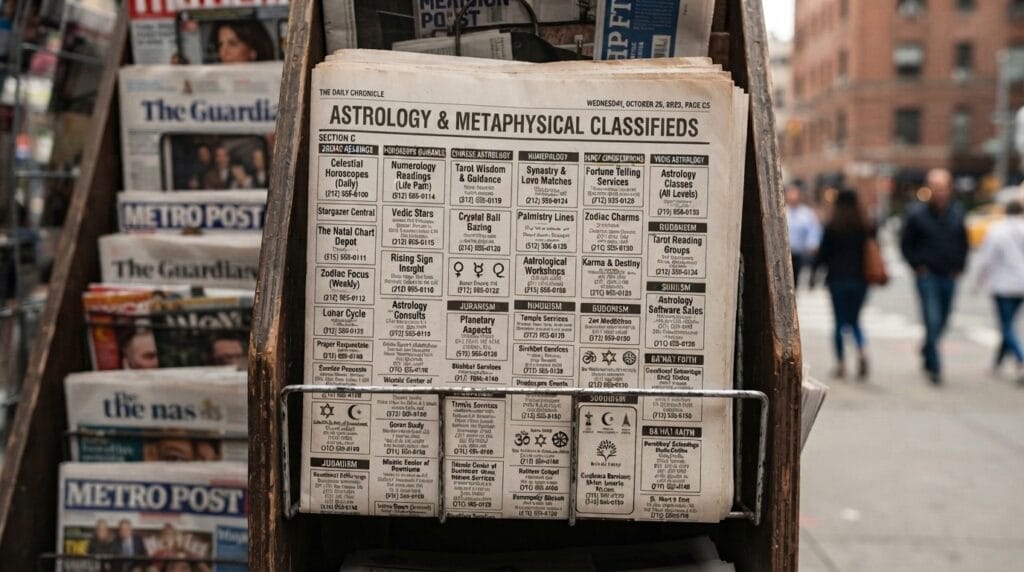
Yet most astrologers and astrology service providers make a critical mistake: they treat their ads and service pages like mere listings in a directory, publishing generic titles like “Astrology Reading” or “Birth Chart” and wondering why they don’t rank. The problem isn’t the quality of their services—it’s the quality of their communication with search engines.
The landscape of search has fundamentally changed. Traditional keyword-based optimization—stuffing service pages with exact-match terms—no longer works. Google’s algorithms have evolved to understand meaning, context, and user intent through systems like Hummingbird, RankBrain, BERT, Neural Matching, and MUM. These systems interpret what people mean when they search, even when queries are phrased in unfamiliar ways.
Semantic SEO is the practice of optimizing content based on meaning, intent, and context, rather than just specific keywords. It involves creating a comprehensive content network that addresses the full scope of a topic, connecting related entities, facts, and concepts in a meaningful structure. For astrology services, this shift is particularly significant. A seeker searching for “birth chart reading” isn’t just looking for any astrological interpretation—they’re seeking self-understanding, life direction, and validation of their inner experiences. A person searching for “love compatibility report” isn’t just curious—they’re often in a relationship crossroads and seeking clarity.
This comprehensive guide will show you how to create astrology service ads and content that leverage semantic SEO—optimizing around topics, user needs, and spiritual intent rather than isolated keywords. You’ll learn:
- What semantic SEO is and why it matters for astrology practices
- How to transform generic service listings into search-optimized, client-attracting content
- Practical examples across three major astrology service types
- How to use schema markup, social media, and content strategy to maximize visibility
- How to optimize for Google Discover and AI-powered search
- The 5 focus keywords to target for maximum ranking potential
Whether you offer natal chart readings, personalized horoscopes, compatibility reports, or any other astrological service, this guide will help you connect with seekers searching for meaningful guidance—and rank higher while doing it.
Part 1: Understanding Semantic SEO for Astrology Services
1.1 What Is Semantic SEO?
Semantic SEO is an advanced optimization approach that goes beyond traditional keyword-focused strategies. It is the process of optimizing web pages based on meaning and intent—incorporating related concepts and further context to help search engines deliver better results. At its core, semantic SEO is about creating content that reflects the meaning behind search queries—not just the exact words people type into Google.
The key components of semantic SEO include:
- Search Intent Understanding: Addressing the why behind the search, not just the what
- Topic Authority: Covering a subject comprehensively, demonstrating expertise
- Entity Recognition: Connecting your content to recognized people, places, concepts, and things
- Contextual Relevance: Ensuring your content fits naturally within the broader conversation
- User Experience: Creating content that is genuinely helpful and engaging
In the past, Google used lexical search—finding results by exactly matching words in the user’s query with words on pages. Today, Google uses semantic search, powered by:
- Natural Language Processing (NLP): AI that understands human language
- Knowledge Graph: A database mapping relationships between entities
- RankBrain: Google’s machine-learning system that interprets complex queries
- BERT: Bidirectional Encoder Representations from Transformers, understanding context in natural language
- MUM: Multitask Unified Model, handling complex, cross-lingual reasoning
For astrology services, this means your content must demonstrate topic authority—covering the full celestial and interpretive context of what you’re offering, not just listing service features.
1.2 Why Semantic SEO Matters for Astrology Practices
The Astrology Market Is Booming
The global astrology market continues to expand, with services such as horoscope readings, birth chart analysis, and personalized consultations in high demand. Online platforms offering personalized horoscopes and astrological guidance are thriving, providing convenient access to astrological services. This growth creates both opportunity and competition—and semantic SEO is the key to standing out.
Astrology Seekers Seek Meaning, Not Just Data
Unlike generic service categories, astrology carries profound personal significance. A customer searching for a “natal chart reading” isn’t just looking for planetary positions—they’re seeking:
- Self-discovery: Understanding their personality, strengths, and life purpose
- Guidance: Clarity on career, relationships, health, and finances
- Validation: Confirmation of their inner experiences and intuition
- Connection: A sense of belonging to something larger than themselves
- Direction: Practical advice for navigating life’s challenges
Semantic SEO aligns your content with these deeper needs. As one expert notes, “For astrologers and artists especially, people are buying connection and trust, not just a service”.
The E-E-A-T Factor
Google’s quality guidelines now emphasize E-E-A-T: Experience, Expertise, Authoritativeness, and Trustworthiness. For astrology services, where skepticism is common, demonstrating genuine expertise and trustworthiness is essential for ranking. Your content must show that you understand astrology deeply—not just that you can list planets and signs.
The Trust Factor
Marketing in the astrology space requires a unique approach. One of the biggest challenges is overcoming skepticism. Many people are curious about astrology but hesitant to try it because of preconceived notions or bad experiences. Semantic SEO helps overcome this by positioning you as a credible, knowledgeable authority rather than a generic service provider.
1.3 The Cost of Generic Service Listings
When you publish a service with a generic title like “Astrology Reading” or “Birth Chart,” you’re:
- Missing search intent: Users searching for specific guidance won’t find you
- Competing with thousands of identical listings: Generic keywords are saturated
- Failing to build topical authority: Google doesn’t see you as an expert
- Losing emotional connection: Your ad doesn’t resonate with the seeker’s journey
- Squandering trust opportunities: You appear like every other generic astrology service
The solution? Transform every service listing into a semantic asset that speaks the language of celestial guidance.
Part 2: The Three-Service Framework—From Generic to Semantic
Below, we examine how to apply semantic SEO principles across three major astrology service types. For each, we compare the common (ineffective) approach with the semantic (strategic) approach across four critical ad components: Title, Description, Category, and Ad Type.
2.1 Natal Chart Reading (Birth Chart Analysis)
Service Example: Comprehensive natal chart interpretation with personalized insights.
| Field | Common Approach (Ineffective) | Semantic Approach (Strategic) |
|---|---|---|
| Title | Birth Chart Reading | Personalized Natal Chart Reading – Discover Your Life Purpose, Strengths & Cosmic Blueprint |
| Description | Birth chart reading based on your birth date, time, and place. Includes planetary positions and interpretations. | Unlock the secrets of your soul with a comprehensive natal chart reading. This in-depth analysis explores the position of the planets at the exact moment of your birth, offering profound insights into your personality, hidden strengths, life challenges, and ultimate life purpose[reference:14]. Perfect for anyone seeking self-discovery, career clarity, or a deeper understanding of their relationships. Includes a detailed 30+ page report and a 60-minute follow-up consultation. |
| Category | Astrology Services | Astrology > Natal Chart Readings > Comprehensive Birth Chart Analysis |
| Ad Type | Service | Service + Content (Free Guide: "How to Read Your Natal Chart") |
Semantic Analysis:
The generic approach (“Birth Chart Reading”) tells the user what you offer but not why they should care. The semantic approach addresses the seeker’s deeper intentions:
- “Discover Your Life Purpose” speaks to existential seeking
- “Strengths & Cosmic Blueprint” frames astrology as practical self-knowledge
- “Personality, hidden strengths, life challenges” addresses common search queries
- “30+ page report + 60-minute consultation” establishes clear value and reduces uncertainty
This approach makes the ad discoverable for searches like “what is my life purpose astrology,” “career guidance birth chart,” and “best natal chart reading for self-discovery” —intentions far more valuable than “astrology reading.”
Semantic Keywords to Target:
- Natal chart, birth chart, cosmic blueprint
- Life purpose, self-discovery, personality insights
- Planetary positions, zodiac signs, houses, aspects
- Career astrology, relationship astrology, life guidance
- Comprehensive reading, detailed report, follow-up consultation
Entity Connections to Include:
- Sun sign, Moon sign, Rising sign (Ascendant)
- Planetary placements (Mercury, Venus, Mars, Jupiter, Saturn, etc.)
- Astrological houses (1st House, 7th House, 10th House, etc.)
- Aspects (conjunction, square, trine, opposition)
2.2 Personalized Horoscope Service
Service Example: Daily, weekly, or monthly personalized horoscope delivered via app, email, or website.
| Field | Common Approach (Ineffective) | Semantic Approach (Strategic) |
|---|---|---|
| Title | Daily Horoscope Subscription | Personalized Daily Horoscope – Your Celestial Guide for Love, Career & Life Decisions |
| Description | Get your daily horoscope based on your zodiac sign. Delivered to your inbox every morning. | Start each day with clarity and confidence. Our personalized daily horoscope delivers actionable celestial insights tailored to your unique birth chart—not just your Sun sign. Receive guidance on love, career, finances, health, and relationships, all curated to align with the current planetary transits affecting your life[reference:15]. Choose daily, weekly, or monthly deliveries. Perfect for anyone seeking mindful direction in an unpredictable world. |
| Category | Horoscopes | Astrology > Horoscopes > Personalized Daily/Weekly/Monthly Forecasts |
| Ad Type | Subscription Service | Subscription Service + Content (Weekly Planetary Transit Video Series) |
Semantic Analysis:
The generic approach (“Daily Horoscope Subscription”) commoditizes a deeply personal service. The semantic approach elevates it:
- “Your Celestial Guide” frames the service as a trusted companion
- “Love, Career & Life Decisions” addresses the three most common areas of concern
- “Not just your Sun sign” differentiates from free generic horoscopes
- “Actionable celestial insights” promises practical value, not vague predictions
- “Current planetary transits” demonstrates astrological expertise
This approach captures searches like “personalized horoscope for my birth chart,” “daily astrology guidance,” and “best horoscope app for career advice.”
Semantic Keywords to Target:
- Personalized horoscope, daily horoscope, weekly forecast
- Celestial guidance, planetary transits, astrological insights
- Love horoscope, career horoscope, financial astrology
- Birth chart-based, tailored astrology, mindful guidance
- Subscription, daily delivery, email horoscope
Entity Connections to Include:
- Current planetary transits (Mercury retrograde, Venus in Taurus, etc.)
- Zodiac signs (Aries, Taurus, Gemini, etc.)
- Houses (solar return, progressed chart)
- Lunar phases (new moon, full moon)
2.3 Astrological Compatibility Report (Synastry)
Service Example: In-depth compatibility analysis between two individuals based on their birth charts.
| Field | Common Approach (Ineffective) | Semantic Approach (Strategic) |
|---|---|---|
| Title | Love Compatibility Report | Astrological Compatibility Report – Unlock the Secrets of Your Relationship Dynamics |
| Description | Compare two birth charts to see your compatibility. Includes synastry analysis. | Deepen your understanding of your most important relationships. This comprehensive compatibility report analyzes the dynamics between two birth charts, revealing attraction points, emotional alignment, communication styles, friction areas, and what truly makes your bond work[reference:16]. Ideal for romantic partners, marriage prospects, business partnerships, and even parent-child relationships. Includes a detailed synastry chart and personalized insights for nurturing your connection. |
| Category | Relationship Astrology | Astrology > Compatibility > Synastry & Relationship Reports |
| Ad Type | Report Service | Report Service + Content (Free Guide: "5 Signs You're Astrologically Compatible") |
Semantic Analysis:
The generic approach (“Love Compatibility Report”) reduces a complex astrological analysis to a simple checkbox. The semantic approach acknowledges the depth of what’s being sought:
- “Unlock the Secrets of Your Relationship Dynamics” speaks to curiosity and mystery
- “Attraction points, emotional alignment, communication styles” addresses specific relationship concerns
- “What truly makes your bond work” focuses on practical relationship improvement
- “Romantic partners, marriage prospects, business partnerships” expands the application
- “Nurturing your connection” positions the service as relationship support, not just prediction
This captures searches like “astrological compatibility for marriage,” “synastry chart interpretation,” and “relationship astrology reading.”
Semantic Keywords to Target:
- Astrological compatibility, synastry, relationship astrology
- Love compatibility, marriage matching, partnership dynamics
- Emotional alignment, communication styles, attraction points
- Birth chart comparison, relationship insights, bond analysis
- Romantic partners, marriage prospects, business compatibility
Entity Connections to Include:
- Sun-Moon compatibility, Venus-Mars dynamics
- 7th House (partnerships), 5th House (romance)
- Synastry aspects (trines, squares, oppositions)
- Composite chart (the relationship’s “birth chart”)
Part 3: The Semantic SEO Framework for Astrology Services
3.1 Satisfy Search Intent First
Search intent is the underlying reason behind a user’s query. For astrology services, intent typically falls into four categories:
| Intent Type | Description | Astrology Example |
|---|---|---|
| Informational | User wants information | “What is a natal chart?” / “How do I find my rising sign” |
| Navigational | User wants a specific site | “Co-Star astrology app” / “AstroTalk login” |
| Commercial | User researches services | “Best birth chart reading online” / “Top-rated compatibility report” |
| Transactional | User wants to book/purchase | “Buy personalized horoscope” / “Book natal chart reading” |
Your service pages must satisfy the dominant intent for each query. A generic “Astrology Reading” page won’t satisfy someone searching for “best compatibility report for marriage”—they need detailed information about methodology, what’s included, and why it’s trustworthy.
3.2 Build Topical Maps and Content Clusters
Instead of isolated service pages, create semantic SEO silos—clusters of related content around a central topic. For an astrology practice, clusters might include:
- Self-Discovery (natal chart guides, personality insights)
- Relationships (compatibility guides, synastry explanations)
- Life Guidance (career astrology, financial astrology, timing)
- Celestial Events (retrograde guides, full moon rituals, seasonal astrology)
- Service Offerings (readings, reports, subscriptions)
Each cluster contains hub pages, supporting articles, and service pages linked contextually. This creates a semantic web rather than a content library.
Example Cluster for Natal Chart Services:
- Hub: “Complete Guide to Natal Chart Reading”
- Supporting: “How to Find Your Rising Sign,” “Understanding Your Moon Sign,” “What Your Venus Sign Says About Love”
- Service: “Comprehensive Natal Chart Reading” (linked from all supporting articles)
3.3 Use Natural Language and Conversational Format
Modern search—including voice search and AI assistants—favors natural, conversational language. Write service descriptions as if you’re speaking to a seeker, not a search engine.
Instead of: “Birth chart reading. Includes planetary positions. 30-page report.”
Write: “Have you ever wondered why you feel things so deeply? Or why certain patterns keep repeating in your life? Your birth chart holds the answers. This comprehensive reading reveals the cosmic blueprint you were born with—your strengths, your challenges, and your unique life purpose.”
3.4 Implement Schema Markup
Schema markup is structured code that helps search engines understand what your content means. For astrology services, schema is particularly powerful because it resolves ambiguity—a “natal chart” is clearly distinguished from other meanings.
Essential Schema Types for Astrology Services:
| Schema Type | Purpose | Example Properties |
|---|---|---|
| Service | Describe service details | name, description, provider, serviceType |
| Product | For report/digital products | name, description, price, availability |
| Offer | Pricing and availability | price, priceCurrency, availability |
| Review | Client testimonials | ratingValue, reviewCount, author |
| FAQ | Frequently asked questions | question, answer |
| Article | Blog content | headline, author, datePublished |
| Event | Astrological events/workshops | name, startDate, location |
Example JSON-LD for a Natal Chart Service:
json
{
  "@context": "https://schema.org/",
  "@type": "Service",
  "name": "Comprehensive Natal Chart Reading",
  "description": "In-depth birth chart analysis revealing life purpose, strengths, and challenges.",
  "provider": {
    "@type": "Person",
    "name": "Your Name"
  },
  "serviceType": "Astrology Consultation",
  "offers": {
    "@type": "Offer",
    "priceCurrency": "USD",
    "price": "149.00",
    "availability": "https://schema.org/InStock"
  }
}
3.5 Optimize for Google Discover and Zero-Click Searches
Google Discover is a personalized content feed that serves content to users before they even search. To appear in Discover:
- Create original, high-quality content
- Use compelling headlines
- Optimize images for visual appeal
- Prioritize mobile optimization
- Build website authority
- Maintain consistent publishing
For astrology services, Discover is particularly valuable because users often engage with spiritual content organically—they’re not actively searching, but they’re receptive to celestial guidance. Content that performs well on Discover includes:
- Timely topics: Mercury retrograde guides, new moon rituals, seasonal astrology
- Visual content: Beautifully designed zodiac infographics, chart visualizations
- Relatable content: “What Your Venus Sign Says About Your Love Life”
- Practical guides: “How to Survive Mercury Retrograde”
3.6 Write Descriptive Subheadings and Use Visuals
Semantic SEO isn’t just about text. Subheadings (H2, H3) help search engines understand content structure. Visuals with descriptive alt text reinforce semantic meaning.
Example Subheading Structure:
- H1: Complete Guide to Natal Chart Readings
- H2: What Is a Natal Chart?
- H3: The Sun, Moon, and Rising Signs
- H3: Understanding Planetary Placements
- H2: What to Expect from a Natal Chart Reading
- H2: How to Choose the Right Astrologer
Part 4: The Strategic Role of Social Media in Astrology Marketing
Social media is often misused as a mere bulletin board for service announcements. This is a significant missed opportunity in the spiritual and wellness niche.
4.1 The Real Function of Social Media for Astrology Services
| Platform | Strategic Function | Example |
|---|---|---|
| Instagram / Facebook | Education & Community Building | Post astrological insights, daily horoscope snippets, and educational content that demonstrates your expertise. For most astrologers, short-form video on Instagram or TikTok paired with an SEO-driven blog delivers the best balance of reach and durability. |
| YouTube | In-Depth Education & Trust Building | Create videos like “How to Read Your Natal Chart,” “Understanding Mercury Retrograde,” or “Astrology for Beginners.” YouTube is the second-largest search engine—tutorial viewers have high purchase intent. |
| Visual Discovery & Inspiration | Pinterest is huge for spiritual content. Pins like “Zodiac Aesthetic,” “Natal Chart Guide,” or “Full Moon Ritual Ideas” drive qualified traffic. | |
| TikTok | Short-Form Education & Entertainment | Quick astrological insights, zodiac humor, and relatable content. Astrology content performs exceptionally well on TikTok due to its visual and engaging nature. |
| Quora / Reddit | Authority Building & Trust | Answer astrology questions thoughtfully. As AstroTalk’s CEO noted, leveraging platforms like Quora has been pivotal in their marketing success. |
4.2 Common Social Media Mistakes vs. Strategic Approach
| Common Mistake | Strategic Approach |
|---|---|
| Posting generic “Book a reading” posts | Posting educational content that demonstrates expertise: “Did you know your Moon sign reveals your emotional needs?” |
| Generic captions with no value | Captions with insight and purpose: “Mercury goes retrograde next week—here’s what that means for your relationships.” |
| Inconsistent posting aligned with business needs | Posting aligned with the astrological calendar: new moons, full moons, retrogrades, eclipses, and seasonal changes |
| Ignoring comments and questions | Engaging with genuine curiosity and building a community around your practice |
| Posting only when you have a promotion | Posting consistently with a content calendar that provides ongoing value |
4.3 Content Ideas for Astrology Social Media
Educational Content:
- “What Your Rising Sign Says About You”
- “How to Find Your Moon Sign”
- “The Difference Between Tropical and Sidereal Astrology”
- “Understanding Your 7th House (Relationships)”
Timely Content:
- New Moon intention-setting guides
- Full moon release rituals
- Mercury retrograde survival tips
- Seasonal astrology (equinoxes, solstices)
- Zodiac season deep dives
Engagement Content:
- “Comment your Sun sign and I’ll tell you something about your love life”
- “Which planet is currently transiting your 10th House?”
- “What’s your Big Three (Sun, Moon, Rising)?”
Trust-Building Content:
- Client testimonials (with permission)
- Behind-the-scenes of a reading
- Your astrological philosophy
- Why you became an astrologer
Part 5: Advanced Semantic SEO Techniques for Astrology Services
5.1 Entity-Based SEO for Astrology
Google’s Knowledge Graph maps relationships between entities—people, places, things, and concepts. For astrology services, entities include:
- Celestial Bodies: Sun, Moon, Mercury, Venus, Mars, Jupiter, Saturn, Uranus, Neptune, Pluto
- Zodiac Signs: Aries, Taurus, Gemini, Cancer, Leo, Virgo, Libra, Scorpio, Sagittarius, Capricorn, Aquarius, Pisces
- Houses: 1st House (Self), 7th House (Partnerships), 10th House (Career), etc.
- Concepts: Natal chart, synastry, transits, progressions, solar return
- Practices: Vedic astrology, Western astrology, Hellenistic astrology, evolutionary astrology
- Events: Mercury retrograde, new moon, full moon, eclipse, equinox, solstice
Your content should explicitly mention these entities and their relationships. For example, a service page for a natal chart reading should connect to entities like “Sun sign,” “Moon sign,” “Rising sign,” “planetary placements,” “houses,” and “life purpose.”
5.2 Keyword Clustering and Semantic Grouping
Instead of targeting individual keywords, group them by topic and intent. For an astrology practice:
| Cluster | Keywords |
|---|---|
| Natal Chart | natal chart, birth chart, birth chart reading, natal chart interpretation, life purpose astrology, cosmic blueprint, personality astrology |
| Compatibility | astrological compatibility, synastry, love compatibility, relationship astrology, marriage matching, partner compatibility, Venus-Mars compatibility |
| Horoscope | daily horoscope, personalized horoscope, weekly astrology, monthly forecast, horoscope subscription, celestial guidance, planetary transits |
| Timing | electional astrology, astrological timing, best dates astrology, wedding astrology, business launch astrology, moving astrology |
5.3 Internal Linking as a Semantic Strategy
Every service page should link contextually to:
- Related services (natal chart → compatibility report)
- Blog articles (guides, tutorials, explanations)
- Category pages
- FAQ sections
- Seasonal content (retrograde guides, full moon content)
This creates a semantic web that signals to Google the full scope of your expertise.
5.4 Optimizing for AI Search (GEO)
Generative Engine Optimization (GEO) is the practice of optimizing for AI-powered search results—Google AI Overviews, ChatGPT, Perplexity, and conversational AI systems. For astrology services, this means:
- Including AI summary blocks
- Adding conversational questions
- Creating FAQ sections
- Using structured schema
- Formatting for short-answer retrieval
Example conversational queries to target:
- “How can astrology help me find my life purpose?”
- “What’s the best way to get a birth chart reading?”
- “Can astrology predict my love compatibility?”
- “How do I choose an astrologer?”
5.5 Voice Search Optimization
Voice search queries are typically longer and more conversational. Optimize for:
- Question-based queries: “Where can I get a personalized birth chart reading?”
- Long-tail phrases: “Best astrological compatibility report for marriage”
- Natural language: “I need help understanding my birth chart”
Part 6: Focus Keywords for Maximum Ranking
Based on the comprehensive analysis above, here are the 5 Focus Keywords specifically selected to dominate the SEO landscape for this article:
| Priority | Focus Keyword | Search Intent | Placement Strategy |
|---|---|---|---|
| Primary (P1) | Semantic SEO for astrology services | Commercial/Informational | Main H1 Title, first 100 words |
| Secondary (P2) | Natal chart reading service | Transactional | H2 in Part 2.1, Meta Description |
| Secondary (P3) | Personalized horoscope subscription | Commercial | H2 in Part 2.2, Service section |
| Long-tail (P4) | Astrological compatibility report | Transactional | H2 in Part 2.3, Image alt texts |
| Discovery (P5) | Astrology content marketing 2025 | Informational | Conclusion, Social Media section |
Pro-Tip: Do NOT stuff all 5 in the first paragraph. Google’s semantic algorithms look for distributed relevance. Use P1 in the title and introduction, P2-P4 in their respective service sections, and P5 in the content strategy sections. This distribution signals comprehensive topical coverage.
Part 7: Implementation Roadmap
Phase 1: Audit (Week 1-2)
- Review all service titles, descriptions, and metadata
- Identify generic listings that need semantic optimization
- Analyze search intent for your top services
- Audit schema markup and technical SEO
- Review competitor content for semantic gaps
Phase 2: Optimization (Week 3-6)
- Rewrite titles with semantic keywords (purpose + service + context)
- Expand descriptions to address user needs and emotional drivers
- Create or update category pages with topical clusters
- Implement service, offer, and FAQ schema
- Optimize images with descriptive alt text
Phase 3: Content Expansion (Week 7-12)
- Create blog content around each service cluster
- Develop educational guides, how-to articles, and explanatory content
- Build internal links between service pages and content
- Publish seasonal content aligned with the astrological calendar
Phase 4: Social Media Integration (Ongoing)
- Post educational and insightful content (not just promotions)
- Align posts with astrological events (new moons, retrogrades, seasons)
- Engage with comments and build community
- Share blog content across platforms
Phase 5: Monitor and Refine (Ongoing)
- Track rankings for semantic keywords
- Monitor organic traffic and bookings
- Update content based on search performance
- Expand topical clusters as services evolve
Conclusion: From Services to Significance
The astrology market is unlike any other service industry. Your clients aren’t just buying information—they’re investing in self-understanding, seeking guidance, and looking for meaning in their lives. Generic service listings treat these sacred offerings as mere commodities, failing to honor their significance and failing to rank in an increasingly semantic search landscape.
Semantic SEO is the bridge between your services and your clients’ souls. By optimizing around topics, user needs, and spiritual intent—not just isolated keywords—you create content that resonates with seekers and ranks with Google.
The three-service framework demonstrates that this approach works across astrology offerings:
- Natal Chart Reading: Self-discovery, life purpose, cosmic blueprint
- Personalized Horoscope: Daily guidance, celestial alignment, mindful direction
- Compatibility Report: Relationship dynamics, emotional alignment, connection insights
Each service type has its own language, entities, and search behaviors. Your job is to speak that language fluently.
Remember: The seeker searching for a “natal chart reading” isn’t just looking for planetary positions—they’re seeking to understand themselves. The person searching for “love compatibility” isn’t just curious—they’re often at a relationship crossroads. The user searching for “personalized horoscope” isn’t just bored—they’re seeking daily direction in an uncertain world. Meet them where they are, speak their language, and honor their journey.
By implementing the strategies in this guide—semantic titles and descriptions, topical content clusters, schema markup, social media with purpose, and optimization for AI and voice search—you’ll not only rank higher but build lasting connections with clients who return again and again.
The bottom line: In the astrology niche, SEO isn’t just about algorithms. It’s about meaning. And meaning, when done right, ranks.
References
- Brainito. (2026). Digital Marketing Strategies for Astrologers in 2026. Retrieved from brainito.com.
- 6Wresearch. (2025). Global Astrology Market (2025-2031) | Trends, Outlook & Forecast.
- Genghis Digital. (2025). Semantic SEO: Definition, Benefits, Strategies & More.
- Digitally Unique. (2025). Semantic SEO: Optimising for Meaning in 2025.
- HawkSEM. (2025). What is Semantic SEO? (+ How to Use It for Higher Rankings).
- AppTweak. (2026). How AstroChat.com improved conversion rates by 30-40% on Google Play.
- Ahrefs. (2025). astrotalk.com‘s Search traffic, Ranking and Backlinks.
- SeoJuice. (2025). SEO para astrólogos y tarotistas: cómo conseguir más clientes.
- Agency.Ernesto. (2025). SEO Efficace per Astrologi.
- Wild & Free. (2025). Digital Marketing as Astrology: What’s Your Strategy Sign?.
- Medium. (2025). Digital Marketing for Astrologers & Spiritual Practitioners.
- Astrology with Lauren. (n.d.). FAQ.
- Abby Lewtas. (n.d.). Astrology Readings.
- Melooha. (2026). Melooha: Trusted Astrology App.
- Planoly. (2026). 5 Posts to Try if You’re Running an Astrology Account.
- Impact Digital. (2025). Boosting Engagement with Social Media Content Calendars for Astrology and Tarot Service.
- Entrepreneur. (2025). The Rise of Digital Astrology: How a Traditional Practice Became a Modern-Day Industry.
- Search Atlas. (2025). What is Google Discover and How to Optimize for Google Discover SEO?.
- Straction. (2026). Google Discover Optimization in 2026: Best Practices & Tips.
- Ranking Guru. (2025). Top 7 Digital Marketing Strategies for Astrologers & Astrology Websites.
- Astrology Website Design. (2025). Create Your Perfect Astrology Website with Custom Kundli Design and SEO Optimization.
- ThatWare. (n.d.). Semantic SEO Pricing.
- OmniUS. (n.d.). Semantic SEO Agency for Valuable Content.
- Usman Ishq. (2025). Semantic SEO Strategy for Service Businesses in 2025.
- Ahrefs. (2025). Semantic SEO: The Advanced Skill Most SEOs Pretend to Understand.