What if the same celestial body that guided the Three Wise Men to Bethlehem also signals the start of Ramadan for 1.8 billion Muslims, determines the date of Easter for 2.4 billion Christians, and marks the Esbat rituals for modern Wiccans and Stregheria practitioners in Italy?
For millennia, humanity has looked to the same Moon to answer the same fundamental questions: When is sacred time? When should I plant, harvest, heal, celebrate, or perform my rituals?
Yet there is a problem that has frustrated mystics, priests, and astrologers for centuries: civil lunar calendars almost never show the exact moment a new phase begins. They show the date of the Full Moon, but not the precise hour—and for magical and religious practitioners, timing is everything.
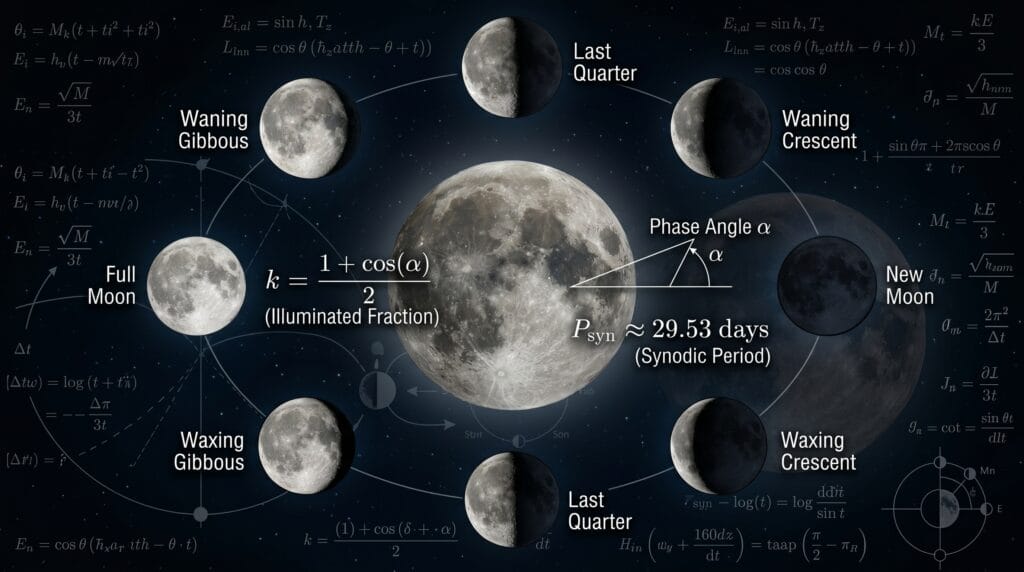
Now, a quiet technological revolution is changing this ancient dilemma. The Astral Lens Lunar Calendar module—developed in direct collaboration with Umbanda priests, Candomblé mães de santo, Wiccan high priestesses, and Italian Streghe—provides something no standard calendar does: the exact moment each lunar phase begins, tailored to your location.
In this comprehensive guide, we explore:
- ✅ How 30+ world religions and magical traditions use the Moon (with practical tables)
- ✅ The critical difference between civil lunar calendars and Astral Lens
- ✅ Moon phase rituals for Wicca, Umbanda, Candomblé, Stregheria, Santería, and more
- ✅ Lunar timing for haircuts, agriculture, spellcasting, and spiritual baths
- ✅ Recommended books (accessible on Amazon) for deeper study
📜 Table of Contents
- Why the Moon Governs Global Sacred Time
- Abrahamic Traditions: Judaism, Islam, and Christianity
- Wicca & Neo-Pagan Traditions: Esbats and Lunar Magic
- Italian Witchcraft: Stregheria and La Vecchia Religione
- Afro-Brazilian Traditions: Umbanda, Candomblé and Quimbanda
- African Diaspora Religions: Santería, Ifá and Hoodoo
- Indigenous Lunar Traditions (North America, Australia and Beyond)
- Asian Lunar Traditions: Taoism, Shinto and Buddhism
- Ancient Civilizations: Egypt, Mesopotamia, Inca, Maya, Aztec and Celtic
- Practical Moon Phase Guide for Magical and Ritual Work
- Why Astral Lens Lunar Calendar Is Different
- Books for Further Study (Available on Amazon)
- Conclusion & Call to Action
<a name="why-the-moon-governs-global-sacred-time"></a>🌙 Why the Moon Governs Global Sacred Time
“The moon marks the seasons” — Psalm 104:19
“They ask you about the crescent moons. Say: They are signs to mark fixed periods of time for mankind and for the pilgrimage.” — Qur’an 2:189
Sacred time is lunar time. Across cultures and continents, the 29.5-day lunar cycle has served as humanity’s original clock—not merely for agriculture and navigation, but for spiritual practice and ritual timing.
According to Britannica’s entry on moon worship, “the sacredness of the moon has been connected with the basic rhythms of life and the universe. The cyclical process of disappearance and appearance of the moon is the basis of the widespread association of the moon with the land of the dead, the place to which souls ascend after death, and the power of rebirth.”
The phenomenon appears consistently worldwide: where the Moon is viewed as female, its phases represent pregnancy, delivery, childhood, maturity, and dying—the complete arc of human existence. Where it is viewed as male, it governs hunting, fate and the regulation of time itself.
This is why virtually every major religious tradition retains lunar calculations at its core—and why the Astral Lens Lunar Calendar has become an indispensable tool for practitioners who need precise, location-based phase timing.
<a name="abrahamic-traditions"></a>🕍 Abrahamic Traditions: Judaism, Islam, and Christianity
✡️ Judaism: Rosh Chodesh and the Sanctification of the Moon
In Judaism, the Hebrew calendar is lunisolar—months begin with the new moon. This tradition, known as Rosh Chodesh (“Head of the Month”), is established in Exodus 12:1-2, where God commands Moses: “This month shall mark for you the beginning of the months; it shall be the first of the months of the year for you.”
The date of Rosh Chodesh was originally confirmed by witnesses observing the new moon—a procedure known as kiddush hachodesh (sanctification of the month). Today, the symbolism endures: “The waxing and waning of the moon represents the possibility of rebirth and redemption. That which is small can one day become large; something partial can once again be complete.”
Major Jewish festivals also follow lunar logic:
- Passover (Pesach) begins on the 15th of Nisan—the full moon after the vernal equinox
- Sukkot (Tabernacles) falls on the full moon of Tishrei
- Purim is celebrated on the 14th of Adar (full moon)
The entire rhythm of Jewish sacred time depends on accurately knowing the moment the new moon appears—a calculation that now, for many, is supported by lunar calendar applications.
☪️ Islam: Ru’yat Al Hilal and the Crescent Moon
For Muslims, the Moon is not merely symbolic—it determines when Ramadan begins, when Eid al-Fitr is celebrated, and when the Hajj pilgrimage occurs.
The traditional practice is Ru’yat Al Hilal—the sighting of the crescent moon with the naked eye. As Gulf News explains: “The sighting of the crescent moon, known in Arabic as ‘Ru’yat Al Hilal’, is the traditional Islamic practice used to mark the beginning of a new month in the Hijri calendar, most notably the start of Ramadan, and Shawwal, which signals Eid Al Fitr.”
Observers look toward the western horizon shortly after sunset on the 29th day of the current lunar month. If the crescent is sighted, the new month begins the following day; if not, the month is completed as 30 days.
The Qur’an itself establishes this lunar framework (2:189): “They ask you [O Prophet] about the crescent moons. Say: They are signs to mark fixed periods of time for mankind and for the pilgrimage.”
Today, scientific calculation increasingly supports traditional sighting—but the exact moment of the new crescent remains a matter of precise astronomical timing. Apps like Astral Lens provide this data without controversy, simply offering the astronomical facts that religious authorities can then interpret according to their traditions.
✝️ Christianity: The Moon and the Date of Easter
Few Christians realize that their holiest day—Easter Sunday—is calculated by the Moon. The rule, established by the Council of Nicaea (325 CE), states:
Easter falls on the first Sunday after the first full moon following the vernal (spring) equinox.
As the Religion Media Centre notes: *”It is no coincidence that Easter Sunday this year is also 20 April. The next full moon after the equinox is the ‘Pink Moon’ … and this is also known as the Paschal Moon, which reflects its connection to Easter and Passover. Easter Sunday is always observed on the following Sunday after that post-equinox full moon.”*
The computus—the calculation of Easter—occupied some of the greatest minds in Christian history, including the Venerable Bede. Alden Mosshammer’s The Easter Computus and the Origins of the Christian Era provides the definitive study of early Christian methods for calculating the phases of the moon to determine Easter.
Thus even Christianity—the world’s largest religion—depends on lunar phase timing for its most sacred celebration.
<a name="wicca-neopagan"></a>🌙 Wicca & Neo-Pagan Traditions: Esbats and Lunar Magic
No tradition reveres the Moon with more explicit ritual structure than Wicca. Here, the lunar cycle is divided into two complementary tracks:
Esbats (Lunar Holy Days)
Esbats are ritual gatherings held specifically to honor the Moon. As noted by Wiccan author Lisa Chamberlain: “Many Wiccans follow the Wheel of the Year, honoring eight Sabbats, or days of power, and Esbats, ritual occasions usually held at each Full Moon.”
Central to the Esbat is “drawing down the moon” —a ritual act of magically raising power and symbolically drawing it into the circle. As each member feels this energy, it empowers their magical work.
Esbats can be celebrated on:
- The Full Moon only
- Both Full and New Moon
- All eight phases (including quarter moons)
Wiccan Lunar Magic by Phase
Each lunar phase carries specific magical correspondences:
| Phase | Magical Focus | Corresponding Wiccan Practice |
|---|---|---|
| New Moon (Dark Moon) | New beginnings, setting intentions, inner work | Banishing, divination, shadow work |
| Waxing Crescent | Growth, attraction, manifestation | Spells for increase, job hunting, money |
| First Quarter | Action, decisions, overcoming obstacles | Breaking bad habits, courage workings |
| Waxing Gibbous | Refinement, patience, adjustment | Spell adjustments, dreamwork |
| Full Moon | Power, culmination, gratitude, divination | Major Esbats, healing, love magic |
| Waning Gibbous | Gratitude, sharing success, teaching | Study groups, mentorship rituals |
| Third Quarter (Last Quarter) | Release, forgiveness, letting go | Banishing illness, cord-cutting |
| Waning Crescent (Balsamic) | Rest, surrender, divination | Deep meditation, ancestor work |
🔮 For the Wiccan practitioner, knowing the exact moment the Moon enters each phase is not optional—it is foundational to effective spellcraft.
<a name="stregheria"></a>🇮🇹 Italian Witchcraft: Stregheria and La Vecchia Religione
Stregheria (Italian for “witchcraft”) is a neo-pagan tradition with roots in pre-Christian Italy. Also called La Vecchia Religione (“The Old Religion”), it maintains a pantheon centered on a Moon Goddess and a Horned God, closely paralleling Wiccan theology.
Stregheria’s lunar calendar divides phases into Dark, Waxing, Full, and Waning—with particular emphasis on the Full Moon (when the Veglione, or great ritual, is performed) and the three days of lunar darkness.
The tradition traces its modern revival to Charles Leland’s Aradia, or the Gospel of the Witches (1899) , which records the teachings of a Tuscan witch named Maddalena. In this text, the goddess Diana—Queen of the Witches and the Moon—sends her daughter Aradia to Earth to teach humanity the ways of magic.
Today, practitioners from the Stregheria community in Italy use lunar calendars to plan their rituals. The Astral Lens Android app has been adopted by users in Italy practicing La Vecchia Religione, using the exact phase start times offered by its Lunar Calendar module to align their Veglione with the precise moment of the Full Moon.
name="afro-brazilian"></a>🇧🇷 Afro-Brazilian Traditions: Umbanda, Candomblé and Quimbanda
In Brazil’s African-derived traditions, the Moon governs every aspect of ritual timing—from ebó (offerings) to banhos de descarrego (spiritual cleansing baths) to the consecration of ritual herbs.
Candomblé
Candomblé honors the Orixás—divine energies of nature. The Moon is particularly associated with Yemanjá (goddess of the seas and motherhood) and Oxalá (the supreme creative force). Rituals performed under specific lunar phases carry distinct energies:
| Moon Phase | Candomblé Applications |
|---|---|
| New Moon | Beginning of obligations, preparation of assentamentos (foundational altars) |
| Waxing Crescent | Offerings to Oxóssi (hunter Orisha) for prosperity and job success |
| First Quarter | Works requiring speed and immediate action |
| Full Moon | Major obrigações (obligations), offerings to Yemanjá, public ceremonies |
| Waning Gibbous | Completion of cycles |
| Third Quarter | Ebó of removal, breaking negative patterns |
| Waning Crescent | Banho de descarrego —final cleansing before the new cycle |
Umbanda
In Umbanda (a syncretic Brazilian tradition blending Candomblé, Kardecist Spiritism, and Indigenous beliefs), the Moon’s role extends to incorporation of spiritual entities (entities) and ritual baths.
Banhos de descarrego (spiritual cleansing baths) are traditionally performed during the Waning Moon, when energy is “decreasing”—making it ideal for removing negative influences, obsessions, and spiritual heaviness.
Ebó of purification follows the same logic: offerings made to the Exus (guardian spirits) and Pombajiras are timed to the Waning Moon to accelerate the removal of energetic obstacles.
In the words of a practicing Umbanda priest who contributed to the Astral Lens development: “I use the app to know the exact moment of the Waning Moon before performing a banho de descarrego. Before, I would miss the timing by hours. Now, I never make a mistake.”
📌 The Herbal Connection: Ossain and Moon-Phase Harvesting
In both Candomblé and Umbanda, the sacred leaves and herbs used in rituals are traditionally harvested according to lunar phases, following the knowledge of Ossain, the Orisha of sacred leaves and healing.
| Herb Action | Preferred Moon Phase | Application |
|---|---|---|
| Purification, removal | Waning Moon | Banho de descarrego, ebó of elimination |
| Attraction, prosperity | Waxing Moon | Offerings to Oxóssi, works for opening paths |
| Consecration, power | Full Moon | Preparing sacred tools, charging amulets |
| Sealing, protection | New Moon | Initiations, preparation of assentamentos |
<a name="african-diaspora"></a>🌍 African Diaspora Religions: Santería, Ifá and Hoodoo
Santería (Lukumí)
Santería, the Cuban tradition of Yoruba origin, maintains a deep lunar connection. According to traditional sources: “During the full moon, Yoruba and Santeria practitioners may perform rituals such as offering fruits and flowers to their Orishas, lighting candles, or performing spiritual baths to cleanse their energy and connect with the divine feminine.”
During the New Moon (Dark Moon) , practitioners “perform rituals such as offering sacrifices, meditating on change and transformation, or taking spiritual baths to cleanse their energy and connect with the power of the dark moon.”
The moon’s waxing and waning also feature prominently in Diloggún patakís (sacred myths), with stories explaining “the waxing and waning of the moon, solar and lunar eclipses, the phenomenon of shooting stars” as expressions of spiritual principles.
Hoodoo and Conjure
In Hoodoo (African American folk magic), the Moon governs rootwork timing:
- Waxing Moon: Mojo hands for attraction, love spells, money drawing
- Full Moon: Candle work for culmination, divination readings
- Waning Moon: Reversal work, uncrossing rituals, jinx-breaking
- New Moon: Road-opening work, new job spells
<a name="indigenous"></a>🪶 Indigenous Lunar Traditions
Native American (Anishinaabe) — Grandmother Moon
In the Anishinaabe tradition, the Moon is Grandmother Nookmis, a sacred being given governance over the cycles of life. As Grandmother Isabelle Measawige explains: “The Moon’s teachings are embedded in 13 sacred laws that guide us through life.”
“The Moon is not just a celestial body, but a sacred entity intertwined with Anishinaabe cultural values and governance principles. Female governance comes from that old woman who hangs in that night sky.”
Many Indigenous peoples represented the 13 lunar cycles on the back of a turtle’s shell—the 13 central scutes corresponding to the 13 moons of the year, and the 28 smaller outer scutes corresponding to the 29.5-day lunar cycle.
Australian Aboriginal (Yolŋu) — Ngalindi (the Moon)
The Yolŋu people of Arnhem Land have a song about ngalindi (the moon) and the changing tides—knowledge that predates Western scientific understanding of lunar-tidal relationships by centuries.
Eclipses are viewed by some Aboriginal groups as “a bit of an omen to say that a relative may be in danger, or someone on a journey had maybe become sick or was injured” —a traditional warning that coincides with the astronomical phenomenon.
<a name="asian-traditions"></a>🎋 Asian Lunar Traditions: Taoism, Shinto and Buddhism
Taoism: Taiyin Xingjun and the Moon Goddess
In Taoism, the Moon is personified as Taiyin Xingjun, also identified with the goddess Chang’e and the Moonlight Bodhisattva (Candraprabha in Buddhism).
Taoist ritual practice designates the first day (Shuo) and fifteenth day (Wang) of each lunar month as sacred days for “fasting, bathing, and holding collective ceremonies in temples to report duties and pray for blessings to the Three Pure Ones.”
The Mid-Autumn Festival remains the most visible expression of Taoist moon worship, featuring “light crimson candles, offering fresh fruits in four vibrant hues, burning incense, and paying homage beneath the gleaming moonlight.”
Shinto: Tsukimi and Moon Deities
Shinto, Japan’s indigenous religion, maintains the tradition of Tsukimi (Moon-Viewing Festival) on the 15th day of the 8th lunar month. According to Misogi Shrine: “Our Moon Festival is based on the tradition of worshipping the sun and moon gods which was handed down by the guardians of the Shinto faith. In ancient times, sun deity worship was performed on the vernal equinox and moon deity worship on the autumn equinox.”
The moon deity is Tsukiyomi no Mikoto, whose name is chanted during ceremonies. The shrine notes: “Our lives are made possible thanks to such unseen forces, so it is important to accept these blessings with a grateful heart each and every day.”
Buddhism: Full Moon Days
In Buddhism, all full moons and new moons are significant, with special ceremonies held in temples. Theravada Buddhism observes:
- Vesak (Buddha’s birth, enlightenment, and death) on the full moon of the lunar month Vesakha
- Magha Puja on the full moon of the third lunar month
- Bi-weekly recitation of the Patimokkha at full and new moons
<a name="ancient"></a>🏛️ Ancient Civilizations
Ancient Egypt: Iah, Thoth and Khonsu
The ancient Egyptians worshipped multiple moon gods:
- Iah (whose name literally means “Moon”)
- Thoth (god of writing, knowledge, and time calculation, wearing a lunar crescent on his head)
- Khonsu (“The Wanderer”), a child form of the moon
By the New Kingdom, Iah became absorbed by Khonsu, but lunar symbolism remained central: “The segments of the moon were used as fractional symbols in writing” —showing the Moon’s role not only in religion but in commerce and daily life.
Mesopotamia: Nanna/Sin
In Sumerian and Babylonian religion, the moon god Nanna (later Sin) was “one of the oldest gods in the Mesopotamian pantheon … first mentioned at the very dawn of writing in Sumer circa 3500 BCE.”
The two chief seats of Nanna’s worship were Ur and Harran, and his emblem—the crescent—remains one of humanity’s oldest religious symbols.
Inca, Maya and Aztec
In the Inca Empire, the Moon was “in some respects, an equally important divinity in the official state cult” to the Sun.
The Maya worshipped Ix Chel, the moon goddess who governed fertility, childbirth, medicine, and weaving. Rituals were performed during specific lunar phases: “During the full moon or new moon, Maya society might perform ceremonies related to women and fertility.”
The Aztecs associated the Moon with Coyolxauhqui (goddess of the moon) and the lunar cycle governed the timing of agricultural and sacrificial ceremonies.
Celtic and Druidic
The ancient Celts followed a 13-month lunar calendar, each month associated with a sacred tree. According to the Handbook of Celtic Astrology: “The ancient Celtic ritual calendar and zodiac of thirteen lunar months was associated with thirteen sacred trees, and these tree signs form the basis for the astrological system.”
Druids performed ceremonies involving the Full Moon, revering the Moon as an essential celestial force alongside the Sun.
<a name="practical-moon-guide"></a>📅 Practical Moon Phase Guide for Magical and Ritual Work
This consolidated table synthesizes lunar practices across traditions.
| Moon Phase | Spiritual Meaning | Preferred Rituals (by Tradition) | Astral Lens Feature |
|---|---|---|---|
| 🌑 New Moon (Dark Moon) | New beginnings, intention setting, silence | Wicca: Shadow work, new spell initiations Candomblé: Preparation of assentamentos Islam: Start of lunar month (Hijri calendar) Judaism: Rosh Chodesh Hoodoo: Road-opening work | Phase start time + notification |
| 🌒 Waxing Crescent | Growth, attraction, building | Wicca: Money spells, job attraction Umbanda: Offerings to Oxóssi Santería: Rituals to attract positive energy | Alert 24h before phase change |
| 🌓 First Quarter | Action, decisions, overcoming obstacles | Wicca: Breaking bad habits Hoodoo: Courage workings Native American: Decision ceremonies | Exact phase start time |
| 🌔 Waxing Gibbous | Refinement, patience, adjustment | Wicca: Dreamwork, spell adjustment Umbanda: Strengthening ongoing works | Personalized calendar |
| 🌕 Full Moon | Culmination, power, divination | Wicca: Esbat, Drawing Down the Moon Candomblé: Major obrigações, Yemanjá offerings Buddhism: Vesak, Magha Puja Christianity: Easter calculation (Paschal Moon) Judaism: Passover, Sukkot Shinto: Tsukimi (Moon-viewing) | Full moon exact time + Esbat reminder |
| 🌖 Waning Gibbous | Gratitude, sharing, teaching | Wicca: Study groups, teaching rituals Druidic: Thanksgiving ceremonies | Phase tracker |
| 🌗 Third Quarter (Last Quarter) | Release, forgiveness, letting go | Wicca: Cord-cutting, banishing illness Umbanda: Ebó of removal Candomblé: Negative energy release | Export to Google Calendar |
| 🌘 Waning Crescent (Balsamic) | Rest, surrender, divination | Wicca: Deep meditation, ancestor work Santería: Dark Moon baths Hoodoo: Uncrossing rituals | Works offline |
<a name="why-astral-lens-different"></a>📱 Why Astral Lens Lunar Calendar Is Different: Precision for Sacred Timing
The Problem with Civil Lunar Calendars
Standard lunar calendars available online (including Google’s own moon phase display) present a critical limitation for ritual practitioners: they show the date of a phase, but rarely the exact hour, minute, and second when that phase begins.
Yet for magic and religious ritual, the moment of phase transition carries the strongest energy. Performing a banishing spell on the exact moment the Moon enters its Waning Quarter produces different results than performing it 12 hours later.
Civil calendars also present another hidden issue: time zone flattening. Many public lunar calendars use a single official time (e.g., UTC) and display that same hour for all locations. A practitioner in Brazil and another in Japan see the same timestamp—even though, astronomically, the phase transition occurs at a different local hour for each longitude.
The Astral Lens Solution
The Astral Lens Lunar Calendar was developed after direct consultation with:
- ✅ Umbanda priests
- ✅ Candomblé mães de santo and pais de santo
- ✅ Wiccan high priestesses
- ✅ Stregheria practitioners (Italian witchcraft)
- ✅ Xamãs and Ayurvedic lunar medicine practitioners
Their shared need was unanimous: “We need to know the exact start time of each lunar phase in our own location, with enough advance notice to prepare our rituals.”
Key Features of the Astral Lens Lunar Calendar
| Feature | Benefit for Practitioners |
|---|---|
| Exact phase start times (hours, minutes, seconds) | Never miss the precise moment of lunar transition |
| Location-based calculation (GPS/time zone) | Accurate for every latitude and longitude |
| Customizable alerts | Receive notifications 24h, 12h, or 1h before any phase |
| Offline functionality | Works in remote ritual locations without internet |
| No account required for basic use | Immediate access |
| Personal lunar calendar (with free registration) | Calculates moon phases for your exact birth moment |
How to Use the Lunar Calendar in Astral Lens
- Download the Astral Lens app from Google Play
- Open the app and scroll to the Lunar Calendar module
- Enter the month and year (or leave blank for current)
- Tap “Generate Calendar”
- View the exact start times for each of the 8 lunar phases
Pro Tip: If you tap “Generate Calendar” with month and year fields empty, the app automatically calculates for the current month and year.
Download the Astral Lens.
The astrological tool for the Android system
The Critical Difference: Start Times vs. Full-Day Labels
Standard calendar: “Full Moon — April 13, 2026”
Astral Lens: “Full Moon begins at 23:22:15 on April 12, 2026 (local time)”
That difference of nearly 24 hours is the difference between ritual effectiveness and missed opportunity.
Also Included: Personal Lunar Calendar
When you register as a free user (no cost), you unlock the Personal Lunar Calendar—a module that:
- Calculates the lunar phase at the exact moment of your birth
- Shows the lunar position for your natal chart
- Lists all moon phases for the entire year for astrological and therapeutic planning
This module is widely used by:
- Professional astrologers
- Energy therapists
- People timing haircuts by lunar phases
- Natural agriculture practitioners
- Those following Ayurvedic lunar medicine
Additional Astral Lens Lunar Modules
The Astral Lens app contains multiple lunar calendars depending on context:
| Module | Use Case |
|---|---|
| Standalone Lunar Calendar | Quick lookup of phase start times for ritual planning |
| Natal Chart Lunar Calculator | Birth moon phase for astrological readings |
| Annual Lunar List | Complete year view for therapists and astrologers |
All lunar data is recalculated on demand whenever the user requests it—ensuring calculations remain accurate even as astronomical models improve.
Why Some Lunar Calendars Show Different Times
A note on apparent discrepancies: Some public lunar calendars use a single “official” time zone (e.g., UTC or Brasília time) and apply it uniformly across all locations. This creates an apparent difference of several hours for practitioners located west or east of the reference meridian.
Astral Lens eliminates this problem by calculating local time based on the device’s actual location. The Moon is in the sky above you—not above Greenwich—and your ritual calendar should reflect that astronomical reality.
<a name="books"></a>📚 Books for Further Study (Available on Amazon)
Wicca & Neo-Pagan Moon Magic
| Title | Author | Focus | Amazon Availability |
|---|---|---|---|
| Wicca: A Guide for the Solitary Practitioner | Scott Cunningham | Complete Wiccan practice including lunar Esbats | ✅ Amazon |
| Wicca Moon Magic | Lisa Chamberlain | Moon spells for Wiccans, witches, and wizards | ✅ Amazon |
| Wicca Natural Magic Kit: The Sun, The Moon, and The Elements | Lisa Chamberlain | Elemental magic, moon magic, Wheel of the Year | ✅ Amazon |
| Dark Moon Magic | (Various) | Supernatural spells for health, wealth, happiness | ✅ Amazon |
Stregheria (Italian Witchcraft)
| Title | Author | Focus | Amazon Availability |
|---|---|---|---|
| Aradia, or the Gospel of the Witches | Charles G. Leland | The foundational text of Italian witchcraft (1899) | ✅ Amazon |
| Italian Witchcraft | Raven Grimassi | Comprehensive guide to Stregheria traditions | ✅ Amazon |
Afro-Brazilian Traditions (Candomblé, Umbanda)
| Title | Author | Focus | Amazon Availability |
|---|---|---|---|
| Candomblé: The Afro-Brazilian Tradition | (Various) | Complete guide to Candomblé, Santeria, and Umbanda | ✅ Amazon |
| The Sacred Candomblé: Principles, Organization, Rituals | (English Edition) | Exhaustive guide for beginners and experienced practitioners | ✅ Amazon |
| The Sacred Umbanda: History, Branches, Organization, Beliefs and Rituals | (English Edition) | Comprehensive overview of Brazilian Umbanda | ✅ Amazon |
| Magic from Brazil: Recipes, Spells & Rituals | Caroline Dow | Authentic Brazilian magic, Orixás, Umbanda | ✅ Amazon |
African Diaspora (Santería, Ifá)
| Title | Author | Focus | Amazon Availability |
|---|---|---|---|
| Diloggún Tales of the Natural World | Ocha’ni Lele | Sacred Santería myths including moon stories | ✅ Amazon |
| Santería: The Religion | Migene González-Wippler | Comprehensive overview including lunar deities | ✅ Amazon |
Ancient and Comparative Lunar Religion
| Title | Author | Focus | Amazon Availability |
|---|---|---|---|
| The Easter Computus and the Origins of the Christian Era | Alden A. Mosshammer | Early Christian lunar calculation methods for Easter | ✅ Oxford/Amazon |
| The Moon: A History for the Future | Oliver Morton | Cultural and scientific history of the Moon | ✅ Amazon |
| *Celtic Astrology: The 13-Sign Lunar Zodiac of the Ancient Druids* | M.G. Boutet | Druidic lunar cosmology and practice | ✅ Amazon |
<a name="conclusion"></a>✨ Conclusion: The Moon Connects Us All — And Now Technology Serves the Sacred
From the Rosh Chodesh celebration of a new moon in Jerusalem, to the Veglione of Italian Stregheria performed under a full moon, to the ebó offerings of Umbanda timed to the waning moon—the same celestial body guides humanity’s most sacred moments.
The challenge has always been practical: How do we know, with precision, when sacred time begins?
The Astral Lens Lunar Calendar answers this ancient question with modern technology. Developed through direct consultation with priests, priestesses, and practitioners from multiple traditions, the app provides:
- ✅ Exact phase start times — not just dates
- ✅ Localized calculations — accurate for your longitude and time zone
- ✅ Customizable alerts — so you never miss a ritual window
- ✅ Offline access — works in remote locations
- ✅ No cost for the calendar module — universal access to sacred timing
Whether you are a:
- 🌙 Wiccan planning your next Esbat
- 🕯️ Umbanda priest performing a banho de descarrego
- 🌿 Candomblé practitioner harvesting herbs under the correct phase
- 🔮 Italian Streghe celebrating the Veglione
- 📜 Muslim seeking the exact new crescent timing for Ramadan
- ✡️ Jewish tracking Rosh Chodesh
- ✝️ Christian curious about Easter computus
- 🌎 Indigenous tradition keeper following Grandmother Moon’s cycle
- 💇 Hair enthusiast using moon phases for hair growth cycles
- 🌱 Natural farmer planting by the Moon
… the Astral Lens Lunar Calendar provides accurate, location-based lunar data for your practice.
🚀 Ready to Time Your Rituals with Precision?
The Astral Lens Lunar Calendar module is 100% free — no account, no subscription, no hidden cost.
Download the Astral Lens.
The astrological tool for the Android system